Subtotal:
$0.00

















Move Vehicles in Seconds Without Drivers or Manual Handling: How AutoMoverBot Reduces Vehicle Movement Costs by Up to 70%
Introduction: The Crisis in Modern Vehicle Logistics
The automotive industry is currently navigating one of the most challenging periods in its history. While much of the public focus remains on the transition to electric vehicles (EVs) and the development of self-driving cars for public roads, a silent crisis is unfolding within the “last mile” of automotive logistics: the physical movement of vehicles within dealerships, auction houses, manufacturing plants, and storage facilities.For decades, the process of moving a vehicle from Point A to Point B within a controlled environment has remained stubbornly manual, archaic, and fraught with inefficiencies.
Whether it is a pristine luxury sedan being delicately repositioned in a high-end showroom, a vast fleet of trade-ins being meticulously organized at a multi-acre auction site, or a newly manufactured SUV being moved from the final assembly line to a high-density holding yard, the process has almost always required a human driver to physically enter the vehicle, start the engine, and navigate it through often-congested spaces.This manual dependency is not just a logistical preference; it has become a significant liability. In an era where every other aspect of the automotive supply chain—from robotic welding on the factory floor to AI-driven demand forecasting—has embraced the digital revolution, the physical movement of the finished product has remained a glaring blind spot.
The traditional model of manual vehicle handling is no longer sustainable in a global economy defined by thin margins and rapid turnaround times. Several converging factors have created a “perfect storm” that is driving up costs, increasing liability, and slowing down operations across the board:
1.The Global Labor Crisis and Escalating Wages: The logistics and transportation sectors are currently facing a talent gap of unprecedented proportions. According to the ManpowerGroup Talent Shortage report, a staggering 74% of employers in the transport, logistics, and automotive sectors are experiencing significant difficulty in securing the skilled labor necessary to maintain basic operations . This shortage is not a temporary fluctuation but a structural shift in the labor market. As the pool of available workers shrinks, competition for talent has driven wages to record highs. For dealerships and logistics hubs, this means that the simple act of “shuffling cars”—once a low-cost, entry-level task—has evolved into an increasingly expensive and difficult-to-manage line item on the balance sheet. Furthermore, high turnover rates in these physically demanding roles lead to constant recruitment and training costs, further draining resources.
2.The Staggering Cost of Human Error and Physical Damage: Human-led vehicle movement is inherently risky, particularly in the high-pressure environments of auctions and busy service centers. Minor “fender benders,” scraped bumpers, dented door panels, and “curbed” alloy rims are not just occasional accidents; they are common occurrences that plague manual operations. While a single scratch on a bumper might seem minor in isolation, the cumulative financial impact is staggering. Beyond the direct cost of repairs, businesses must contend with the diminished resale value of the vehicle, the administrative burden of filing insurance claims, and the potential for increased premiums. In the case of new vehicle logistics, even the slightest blemish can result in a “total loss” of the sale or a significant discount, directly hitting the bottom line. Furthermore, the risk of interior damage—such as soiled upholstery or scratched dashboards—is ever-present when different drivers enter and exit hundreds of vehicles daily.
3.Operational Bottlenecks and Throughput Constraints: Efficiency in automotive logistics is measured by throughput—the number of vehicles processed in a given timeframe. Manual operations are inherently constrained by human limitations. Drivers require shifts, breaks, and time for coordination. In high-volume environments like vehicle auctions, major shipping ports, or large-scale manufacturing plants, the “human factor” becomes a significant bottleneck. The time taken to locate a specific vehicle, find the correct key, wait for a driver to arrive, and then maneuver the car through a crowded lot creates a massive cumulative delay. These inefficiencies ripple through the entire supply chain, leading to missed shipping windows, delayed deliveries, and frustrated customers. In a world where “just-in-time” logistics is the standard, these manual delays are no longer acceptable.
4.Severe Space Constraints and Urban Congestion: As urban real estate prices continue to soar globally, vehicle storage facilities, dealerships, and parking operators are under immense pressure to maximize the utility of every square foot of available space. Traditional manual parking is incredibly space-inefficient. Vehicles must be parked with enough “buffer room” for a driver to open the door, exit the vehicle, and walk away. Furthermore, wide aisles are required to allow human drivers to maneuver cars into and out of spots. This “human-centric” design leads to a significant amount of wasted space—often up to 30% of a facility’s potential capacity. In land-constrained environments like city-center dealerships or busy ports, this wasted space represents a direct loss of potential revenue. AutoMoverBot addresses this by enabling high-density parking that is simply impossible with human drivers.
Enter AutoMoverBot, the world’s leading Vehicle Moving AMR (Autonomous Mobile Robot). Designed to solve the inefficiencies of manual vehicle handling, AutoMoverBot allows organizations to move vehicles in seconds without drivers or manual handling, effectively reducing vehicle movement costs by up to 70%.This comprehensive guide explores how this revolutionary Vehicle Mover Robot is transforming the industry, providing a deep dive into its technology, ROI, and diverse applications across the global automotive landscape. For more detailed product information, visit the AutoMoverBot product page.
What Is AutoMoverBot?
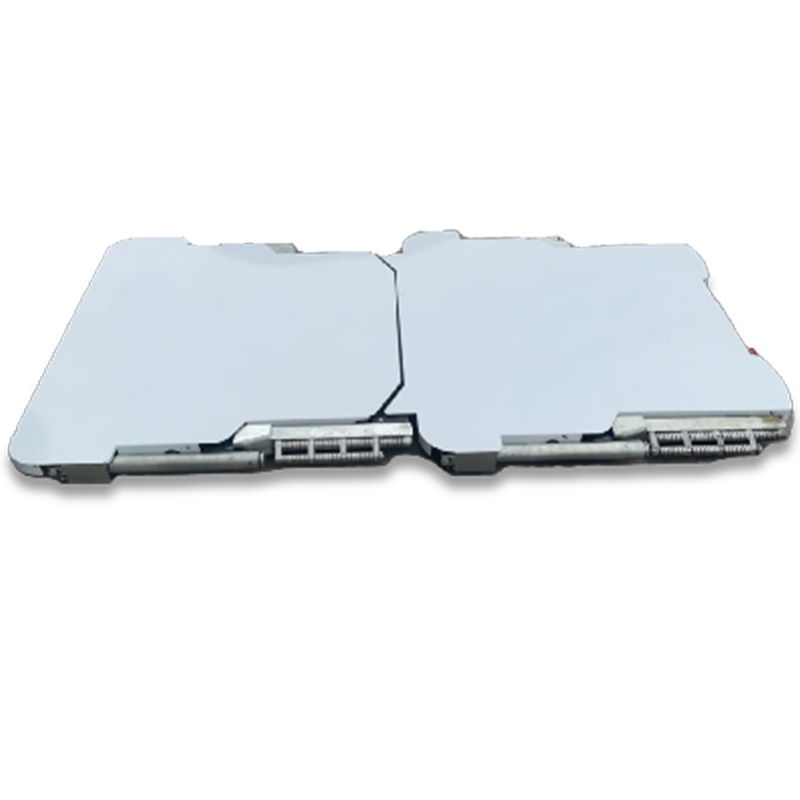
At its core, AutoMoverBot is a high-performance Autonomous Mobile Robot (AMR) specifically engineered for the heavy-duty task of transporting vehicles. Unlike traditional tow trucks or manual car dollies, AutoMoverBot is a sophisticated piece of Vehicle Transportation Automation equipment that utilizes AI and advanced robotics to handle vehicles with surgical precision.
Defining the Vehicle Moving AMR
An Autonomous Mobile Robot (AMR) differs from an Automated Guided Vehicle (AGV) in its ability to navigate dynamically. While an AGV follows fixed paths (often marked by wires or magnets), an AMR like AutoMoverBot uses on-board sensors and AI to understand its environment, avoid obstacles, and determine the most efficient path to its destination.AutoMoverBot is categorized as a Semi-Automatic Vehicle Moving AMR, a distinction that is critical to its operational success. While the robot handles the heavy lifting, complex navigation, and precision positioning autonomously, it is designed to work in seamless harmony with human operators. This “cobot” (collaborative robot) approach ensures that businesses can leverage the speed and precision of robotics while maintaining human oversight for high-level decision-making. A single staff member, equipped with a tablet or smartphone, can manage an entire fleet of AutoMoverBots via an intuitive mobile app. They can direct robots to pick up specific vehicles, transport them to designated zones, and drop them off with millimeter precision—all without ever needing to touch a steering wheel or step inside a vehicle’s cabin. This not only increases efficiency but also fundamentally changes the nature of the lot attendant’s role from physical laborer to “fleet manager.”
Key Technological Pillars
The “intelligence” of the AutoMoverBot is built on several key technologies:
•Advanced AI-Powered Vehicle Positioning and Recognition: The core of the AutoMoverBot’s intelligence lies in its sophisticated computer vision system. Using high-resolution cameras and proprietary machine learning algorithms, the robot can identify and analyze the specific geometry of any vehicle it encounters. This includes the precise location of the tires, the wheelbase dimensions, and the ground clearance profile. This “vision” allows the robot to align itself with surgical precision, ensuring that the clamping mechanism engages perfectly every time. Whether it is a low-slung sports car or a heavy-duty SUV, the AI ensures a secure, damage-free grip without the need for manual adjustment or calibration.
•Precision Laser-Guided Navigation (LiDAR): To navigate complex and dynamic environments, AutoMoverBot utilizes state-of-the-art Light Detection and Ranging (LiDAR) technology. By emitting thousands of laser pulses per second, the robot creates a high-fidelity, 360-degree digital map of its surroundings in real-time. This allows the robot to understand its exact position within a facility to within millimeters. Unlike older AGV systems that require fixed tracks or magnetic strips, AutoMoverBot’s LiDAR-based SLAM (Simultaneous Localization and Mapping) enables it to navigate through narrow aisles, avoid temporary obstacles, and find the most efficient path to its destination entirely autonomously.
•Multi-Layered Collision Prevention and Safety Systems: Safety is the paramount design principle of the AutoMoverBot. The robot is equipped with a redundant array of safety sensors, including ultrasonic sensors, bumper switches, and the aforementioned LiDAR. These systems work in concert to create a dynamic “safety zone” around the robot. If a pedestrian, another vehicle, or even a small piece of debris enters this zone, the robot’s AI instantly calculates the risk and initiates a controlled stop or a corrective maneuver. This level of safety far exceeds the reaction times of a human driver, virtually eliminating the risk of accidents in the workplace.
•Heavy-Duty Robotics and Structural Engineering: While the AutoMoverBot’s software is “smart,” its hardware is “strong.” The robot is constructed from industrial-grade 6mm steel plating, designed to withstand the rigors of 24/7 operations in demanding environments like shipping ports and manufacturing plants. Its high-torque electric motors and precision hydraulic lifting systems allow it to effortlessly lift and transport vehicles weighing up to 3.0 tons (3,000kg). Every component, from the heavy-duty PU driving wheels to the reinforced clamping arms, is engineered for longevity and reliability under extreme loads.By integrating these technologies, AutoMoverBot serves as more than just a tool; it is a comprehensive Vehicle Moving AI Robot system that redefines what is possible in automotive logistics.
Why Traditional Vehicle Movement Is Broken
To understand the value of Vehicle Logistics Automation, one must first examine the deep-seated flaws in the traditional manual movement model. For decades, the industry has accepted these inefficiencies as “the cost of doing business,” but in a modern, data-driven economy, these cracks are becoming impossible to ignore.
1. The Labor Trap
Manual vehicle movement is incredibly labor-intensive. In a typical large dealership or auction house, dozens of employees spend their entire day simply moving cars.•Inefficiency: For every car moved, a driver must walk to the vehicle, enter it, start the engine (if it starts), move it, park it, and then walk back or be shuttled to the next vehicle.•Dead Time: Research suggests that up to 40% of a lot attendant’s day is spent “in transit” between vehicles rather than actually moving them.•Driver Shortages: As mentioned earlier, finding reliable, low-cost labor for these roles is becoming increasingly difficult, leading to higher turnover and training costs.
2. The Damage and Liability Problem
Human error is the leading cause of vehicle damage in logistics.•Physical Damage: Scraped bumpers, dented doors, and curbed wheels occur frequently during tight maneuvering.•Mechanical Wear: Frequent short-distance driving (often with cold engines) is detrimental to a vehicle’s mechanical health, particularly for new cars or high-end luxury models.•Insurance Costs: High damage rates lead to increased insurance premiums and deductible payments. For many businesses, the “hidden cost” of manual handling can amount to thousands of dollars per month in lost value and repairs.
3. Safety Risks
Moving heavy machinery in confined spaces with pedestrians present is inherently dangerous.•Blind Spots: Drivers in many modern vehicles (especially large SUVs and trucks) have significant blind spots, increasing the risk of striking a coworker or a customer.•Exhaust Emissions: Moving vehicles indoors (in showrooms or service bays) creates harmful exhaust fumes, requiring expensive ventilation systems and posing health risks to staff.
4. Productivity and Throughput Bottlenecks
In high-volume environments, speed is everything.•The “Key Hunt”: Manual movement often requires finding the specific key for a specific car. If a key is lost or a battery is dead, the entire workflow grinds to a halt.•Limited Capacity: A human can only move one car at a time. During peak periods (such as the arrival of a transport truck), the inability to move cars fast enough creates a backlog that affects the entire supply chain.
5. Space Inefficiency
Manual parking requires “human-centric” design.•Door Clearance: Cars must be parked far enough apart for a driver to open the door and exit.•Aisle Width: Drivers need wide aisles to maneuver vehicles into spots.•The Result: Traditional lots often lose 20-30% of their potential storage capacity simply to accommodate the needs of human drivers.AutoMoverBot was created specifically to shatter these limitations, offering a path toward Vehicle Transportation Automation that is faster, safer, and significantly more cost-effective.
How AutoMoverBot Works: A Step-by-Step Operational Workflow
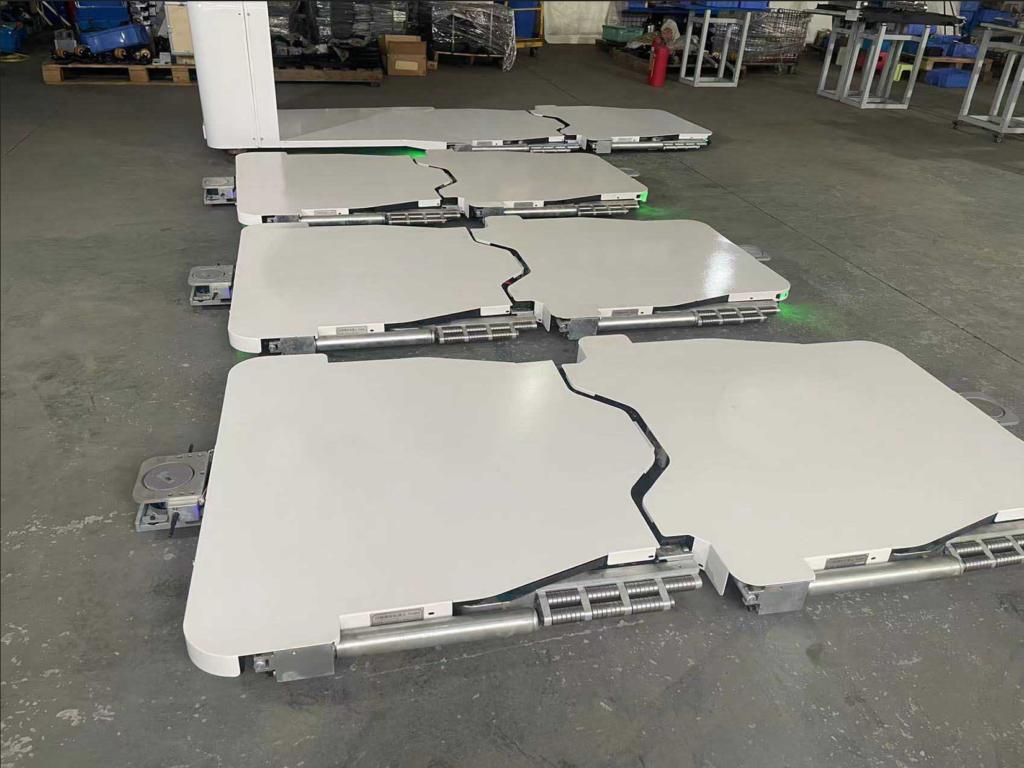
The brilliance of the AutoMoverBot lies in its simplicity for the user, despite the complex technology under the hood. It transforms a complex logistical task into a “point-and-click” operation. Here is how the Car Moving Robot operates in a real-world environment.
Step 1: Deployment and Connection
The operator activates the AutoMoverBot via a secure mobile application or a central control tablet. The robot connects to the facility’s WiFi network, allowing for real-time data exchange and remote monitoring.
Step 2: AI-Powered Positioning
The operator directs the robot to a specific vehicle. Using its onboard cameras and AI sensors, the Vehicle Moving AI Robot identifies the vehicle’s orientation and wheel positions. The robot then maneuvers itself underneath the vehicle, centering its chassis between the wheels.
Step 3: One-Click Clamping and Secure Lifting
Once the robot is perfectly centered beneath the vehicle, the operator initiates the “one-click” clamping sequence. This is where the robot’s mechanical engineering truly shines. The heavy-duty robotic arms extend laterally, making contact with all four tires simultaneously. The system uses pressure sensors to ensure an optimal grip—firm enough to prevent any movement during transport, but gentle enough to avoid any damage to the tires or rims.This method of lifting is a game-changer for the industry. Because the robot only makes contact with the tires, it never touches the vehicle’s bodywork, chassis, or sensitive undercarriage components. This is a critical feature for protecting high-value luxury cars, vintage collectibles, or brand-new inventory that must remain in “factory-perfect” condition. The vehicle is then lifted approximately 115mm off the ground, providing enough clearance to navigate over small bumps or inclines while maintaining a low center of gravity for maximum stability.
Step 4: Autonomous Transport
With the vehicle securely gripped, the AutoMoverBot lifts it slightly off the ground (approximately 115mm). The operator then directs the robot to the destination. The robot handles the navigation, using its LiDAR sensors to “see” its surroundings and avoid obstacles in real-time.
Step 5: Precision Placement
Upon reaching the destination, the robot maneuvers the vehicle into the exact spot required. Because the robot can rotate 360 degrees on its own axis, it can place vehicles in tight spots that would be impossible for a human driver to navigate.
Step 6: Release and Return
The robot lowers the vehicle, disengages the clamps, and retracts its arms. It is then immediately ready for its next task or can be directed to a charging station.
The Operational Advantage
This workflow eliminates the need for keys, eliminates the risk of interior damage (as no one enters the car), and allows a single operator to move multiple vehicles simultaneously by managing a fleet of robots. It is the ultimate expression of Vehicle Handling Automation.
Technical Specifications: The Engineering Behind the Excellence
To understand why AutoMoverBot is the preferred Vehicle Mover Robot for global brands, one must look at the rigorous engineering standards it meets. Every component is designed for durability, precision, and safety.
| Feature | Specification |
| Maximum Vehicle Weight | 3.0 Tons (3,000 kg) |
| Maximum Vehicle Width | 2.05 meters (Excluding mirrors) |
| Maximum Vehicle Length | 5.5 meters |
| Robot Weight | 500 kg |
| Dimensions | 2.1m x 1.1m x 0.115m |
| Maximum Speed | 1.0 m/s (approx. 3.6 km/h) |
| Working Hours | 4 hours (Continuous operation) |
| Connectivity | WiFi / Telecom |
| Lifting Height | 115 mm |
| Ground Clearance Required | 11.5 cm |
| Climbing Capacity | 4.18% (Loaded) |
| Construction Material | High-Quality 6mm Steel Panel |
| Safety Features | Laser Collision Prevention, Obstacle Detection |
Why These Specs Matter
•3.0 Ton Capacity: This allows the robot to handle everything from compact cars and luxury sedans to heavy electric vehicles and large SUVs.
•Ultra-Low Profile: At just 11.5cm high, the robot can slide under almost any modern vehicle, including sports cars with low ground clearance.
•WiFi Connectivity: Enables integration with broader Vehicle Logistics Automation Software and fleet management systems.
•4-Hour Battery Life: Designed for high-intensity shifts, with rapid charging capabilities to ensure maximum uptime.
How AutoMoverBot Reduces Costs by Up to 70%
The most compelling argument for adopting Vehicle Transportation Automation is the bottom line. AutoMoverBot isn’t just a technological marvel; it is a financial powerhouse. When organizations switch from manual handling to the AutoMoverBot system, they typically see a reduction in movement-related costs of up to 70%.
The ROI Calculation: Manual vs. AutoMoverBot
To understand these savings, let’s look at a realistic ROI assessment for a mid-sized vehicle processing facility (such as a dealership or small auction).
1. Labor Cost Savings
•Manual Scenario: A facility employs 4 full-time lot attendants to move vehicles. At an average cost (including benefits, taxes, and overhead) of $45,000 per year per employee, the annual labor cost is $180,000.•AutoMoverBot Scenario: The facility implements 2 AutoMoverBots managed by 1 existing staff member. The other 3 roles are reallocated or eliminated. The labor cost drops to $45,000.•Annual Saving: $135,000.
2. Damage and Insurance Savings
•Manual Scenario: The facility averages 2 minor “incidents” per month (scrapes, dents). Average repair cost + diminished value + administrative time = $1,500 per incident. Annual cost: $36,000.•AutoMoverBot Scenario: With laser-guided precision and no human drivers inside the cars, the damage rate drops to near zero. Annual cost: $2,000 (buffer for unforeseen issues).•Annual Saving: $34,000.
3. Space Optimization (Revenue Increase)
•Manual Scenario: A lot holds 500 cars.•AutoMoverBot Scenario: Because the robot doesn’t need to open doors and can maneuver in tighter spaces, the lot capacity increases by 20%. The lot now holds 600 cars. If the storage/processing margin per car is $100/month, the facility generates an additional $120,000 in annual revenue.
Total Financial Impact
In this scenario, the facility sees a total positive financial swing of $289,000 per year. Even after accounting for the initial investment or lease payments for the robots, the payback period is often less than 12 months.
ROI for Specific Industries
•Car Dealerships: Focus on reducing valet/porter labor and eliminating “lot rash” (minor damage).
•Vehicle Auctions: Focus on increasing “throughput”—moving more cars through the auction lane in less time.
•Ports and Logistics Hubs: Focus on massive space optimization and 24/7 operational capability.
•Vehicle Storage Facilities: Focus on high-density parking to maximize revenue per square foot.By automating the “grunt work” of vehicle movement, businesses can redirect their human talent toward high-value tasks like sales, customer service, and technical inspections, further boosting overall profitability.[To be continued in the next section: Industry Applications…]
Industry Applications: Revolutionizing Every Sector of Automotive Logistics
The versatility of the AutoMoverBot makes it a transformative tool across a wide array of industries. Any organization that handles a significant volume of vehicles can benefit from the precision, safety, and efficiency of a Vehicle Moving AMR. Below, we explore the specific benefits and ROI drivers for various sectors.
1. Car Dealerships and Showrooms
For modern dealerships, the customer experience is paramount. However, the “behind-the-scenes” logistics of moving inventory can often detract from that experience.
•Unmatched Showroom Precision and Safety: Moving a high-value vehicle into a glass-walled showroom is one of the most high-stress tasks for any dealership employee. A single slip of the clutch, a misjudged turn, or a momentary lapse in concentration can result in catastrophic damage to both the vehicle and the building’s architecture. AutoMoverBot eliminates this stress entirely. The robot allows for millimeter-perfect placement in the tightest showroom spaces, ensuring that every vehicle is displayed at its most flattering angle. Furthermore, because the robot is fully electric, it eliminates the risk of harmful exhaust fumes or unsightly tire marks on polished showroom floors, creating a cleaner and safer environment for both staff and customers.
•Dynamic Inventory Rotation and Merchandising: To maintain a high-performing dealership, inventory must be rotated frequently to keep the lot looking fresh and to highlight new arrivals. Traditionally, this is a labor-intensive process that takes a team of porters several hours, often resulting in “lot rash”—those minor but expensive-to-fix scratches and dents. With AutoMoverBot, a single staff member can reorganize an entire front-row display in a fraction of the time. This ensures that the most desirable inventory is always in the best position to catch a customer’s eye, directly contributing to increased sales velocity.
•Optimizing Service Department Workflow: In the service department, moving “dead” vehicles (those with mechanical failures or dead batteries) is a persistent bottleneck. Traditionally, moving a disabled car requires 3 to 4 technicians to stop their high-value work and physically push the vehicle into a service bay. This is not only inefficient but also poses a significant risk of workplace injury. With the AutoMoverBot, a single person can move a disabled vehicle effortlessly and safely, keeping the service workflow moving and ensuring that technicians stay focused on their primary, revenue-generating tasks.
•Direct ROI and Brand Protection: The financial benefits for dealerships are twofold. First, there is the direct reduction in labor costs associated with lot management. Second, and perhaps more importantly, there is the preservation of vehicle value. By eliminating the minor damages that occur during manual handling, dealerships save thousands of dollars annually in “reconditioning” costs. Furthermore, using cutting-edge robotics reinforces the dealership’s brand as a modern, high-tech leader in the automotive space.
2. Vehicle Auctions and Remarketing
Auctions are high-volume, high-speed environments where every second counts. The ability to move thousands of vehicles through “the block” determines the facility’s daily revenue.
•Maximizing Throughput and Lane Efficiency: In the fast-paced world of vehicle auctions, time is literally money. The speed at which vehicles can be moved through the “auction block” determines the total revenue for the day. Traditional manual movement is plagued by delays—waiting for drivers, searching for keys, or jump-starting dead batteries. AutoMoverBot shatters these bottlenecks. The robot can move cars to the auction line with robotic consistency and speed. Because it lifts the vehicle by the tires, the robot doesn’t care if the car won’t start or if the keys are missing. This ensures a constant, uninterrupted flow of vehicles, allowing auction houses to process more units per hour and increase their overall profitability.
•On-Demand Labor Scalability: Auction volume is notoriously cyclical, with massive spikes during major sale events followed by quieter periods. Managing a manual labor force for these fluctuations is a constant headache for management. Instead of the costly and inefficient process of hiring, training, and managing temporary drivers, auction houses can deploy a fleet of AutoMoverBots. This “robotic workforce” is available 24/7, requires no overtime pay, and can be scaled up or down instantly to match the day’s volume.
•Protecting High-Value Assets and Reducing Liability: Auctions frequently handle high-value classic cars, exotic supercars, and late-model luxury vehicles. For these assets, the risk of damage during manual transport is a significant liability. A single scratch on a vintage Ferrari can result in a claim for tens of thousands of dollars. By using a robot that never enters the cabin and never touches the bodywork, auction houses can virtually eliminate these high-value claims. This not only protects the auction’s bottom line but also builds trust with high-end consignors and buyers
•Data-Driven Lot Management: Integrating AutoMoverBot with the auction’s management software allows for unprecedented visibility into lot operations. Management can track exactly where every vehicle is located and how long it took to move it. This data allows for continuous optimization of the lot layout and movement patterns, further driving efficiency and reducing operational costs.
3. Automotive Manufacturers and Assembly Plants
In the world of “Industry 4.0,” automation is the standard. AutoMoverBot fits perfectly into the modern smart factory.
•Streamlining End-of-Line Logistics and Yard Management: In a high-speed automotive assembly plant, the “end-of-line” is a critical juncture. As soon as a vehicle completes its final inspection, it must be moved out of the plant and into a holding yard or onto a shipping terminal to make room for the next unit. Any delay at this stage can cause a “backup” that affects the entire production line. AutoMoverBot provides a continuous, automated solution for this transition. The robot can whisk vehicles away as soon as they are ready, ensuring that the production flow is never interrupted. This level of automation is essential for maintaining the high-throughput requirements of modern automotive manufacturing.
•Precision Movement for Testing and Quality Control: Throughout the manufacturing process, vehicles must be moved between various specialized testing stations—from emissions and sound testing to high-speed track evaluations and final paint inspections. AutoMoverBot provides a standardized, repeatable, and highly precise method for these movements. Unlike human drivers, who may vary in their driving style, the robot moves every vehicle with the exact same parameters. Furthermore, using a robot to move vehicles within the testing facility ensures that no unnecessary mileage or wear is added to the vehicle before it reaches the customer.
•Enhancing Factory Safety and Reducing Workplace Accidents: Modern automotive factories are incredibly complex environments, with a high density of workers, automated machinery, and other mobile robots. Introducing human drivers into this environment to move finished vehicles adds a significant layer of risk. The advanced LiDAR and collision prevention systems of the AutoMoverBot are specifically designed for these crowded spaces. The robot “sees” in 360 degrees and can react to obstacles with a speed and precision that far exceeds human capabilities. By replacing human drivers with AMRs, manufacturers can significantly reduce the risk of workplace accidents and the associated liabilities.
•Seamless Integration with Industry 4.0 Ecosystems: AutoMoverBot is designed to be a native participant in the “Smart Factory” ecosystem. Its software can be integrated with Manufacturing Execution Systems (MES) and Warehouse Management Systems (WMS), allowing for fully automated task assignment and real-time tracking of every vehicle’s location. This level of data integration provides plant managers with unprecedented visibility into their logistics operations, enabling continuous improvement and more accurate demand planning.
•24/7 Operational Capability and Labor Optimization: Manufacturing plants often operate on a three-shift basis, 24 hours a day. Finding and managing drivers for the night and weekend shifts can be particularly challenging and expensive. AutoMoverBot provides a reliable, 24/7 robotic workforce that doesn’t require shift breaks, overtime pay, or holiday leave. This allows manufacturers to optimize their human labor, redirecting staff to more complex, value-added roles while the robots handle the repetitive task of vehicle movement.
4. Vehicle Logistics and Port Operators
Ports are the “bottlenecks” of the global automotive supply chain. Thousands of vehicles arrive on Ro-Ro (Roll-on/Roll-off) ships and must be organized for inland transport.
•Unlocking Massive Space Optimization in High-Value Port Real Estate: Shipping ports are the primary gateways for the global automotive trade, but they are also some of the most land-constrained and expensive real estate on the planet. Port operators are under constant pressure to increase the “density” of their vehicle holding yards. Traditional manual parking requires wide aisles and “door-opening” clearance between cars, leading to significant wasted space. By utilizing AutoMoverBot as a Smart Parking Robot, port operators can pack vehicles in ultra-high-density configurations. The robot can place vehicles with only a few centimeters of clearance between them, as it doesn’t need to open doors or accommodate a human driver. This can increase the storage capacity of a port terminal by up to 30% without expanding its physical footprint—a massive increase in revenue potential per acre.
•Automated Sorting and Dynamic Lot Organization: Vehicles arriving at a port must be rapidly sorted and organized based on their final destination, model type, or specific dealer order. This “shuffling” process is incredibly complex and labor-intensive when done manually. AutoMoverBot automates this entire workflow. The robot can be directed to “pick and place” vehicles according to a digital manifest, ensuring that the right cars are always in the right position for the next stage of their journey—whether that is onto a car-carrier truck, a rail wagon, or another ship. This automated sorting reduces the time a vehicle spends in the port, increasing overall throughput and reducing port congestion.
•Preserving Vehicle Condition by Eliminating “Cold Starts”: Vehicles arriving at ports have often been in transit for weeks. Starting an engine for a short 100-yard move within the port is detrimental to the vehicle’s mechanical health, particularly for high-performance engines and delicate battery systems in EVs. These “cold starts” contribute to engine wear and can lead to dead batteries. AutoMoverBot moves vehicles “cold,” with the engine off and the transmission in neutral. This preserves the vehicle’s “factory-fresh” condition and ensures that the end customer receives a car that has not been subjected to unnecessary mechanical stress
•Enhanced Security and Reduced Theft Risk: Ports are high-security environments where the risk of vehicle theft or unauthorized access is a constant concern. When vehicles are moved by robots, the keys can remain in a secure, central location, and no human ever needs to enter the vehicle’s cabin. This significantly reduces the risk of “joyriding,” theft of interior components, or unauthorized access to sensitive vehicle data. Furthermore, the robot’s every move is logged, providing a complete and indisputable audit trail of every vehicle’s movement within the port facility.
•ROI Factor: Transforming Port Efficiency and Profitability: For port operators, the ROI of AutoMoverBot is driven by three primary factors: increased storage capacity (revenue per acre), reduced labor costs for lot attendants, and the elimination of damage-related claims. In a high-volume port environment, these savings can amount to millions of dollars annually, making the transition to robotic logistics an easy financial decision.
5. Smart Parking and Property Management
In crowded cities, parking is a premium service. Property managers are increasingly looking to Parking Automation Robots to solve their space problems.
•Revolutionizing Valet Services with Robotic Automation: In the competitive world of luxury hospitality and high-end residential real estate, the valet service is often the first and last point of contact for a guest or resident. Traditional valet parking is fraught with challenges—from long wait times and labor shortages to the risk of vehicle damage and theft. AutoMoverBot transforms this experience. A guest can simply leave their vehicle in a designated “drop-off” zone, and the robot will autonomously transport it to a secure, high-density storage area. This “robotic valet” service is faster, more reliable, and significantly more secure than traditional human-led operations, providing a truly premium experience that reflects the high standards of the property.
•Eliminating the Risk of Theft, Joyriding, and Unauthorized Access: One of the primary concerns for owners of high-value vehicles when using valet or commercial parking is the risk of unauthorized access. When a human driver moves a vehicle, there is always the potential for “joyriding,” theft of personal belongings from the cabin, or even the theft of the vehicle itself. AutoMoverBot completely eliminates these risks. Because the robot moves the vehicle by its tires and never requires access to the interior, the car remains locked and secure at all times. This level of security is a major selling point for luxury apartment buildings, high-end hotels, and secure airport parking facilities.
•Retrofitting Existing Parking Infrastructure for the Future: Many existing parking garages are struggling to cope with the increasing size of modern vehicles and the growing demand for parking spaces. Traditionally, the only way to increase capacity was to build expensive, built-in automated parking systems (AS/RS), which require massive structural changes. AutoMoverBot offers a much more flexible and cost-effective alternative. The robot can be deployed in existing parking garages with minimal modification, allowing property managers to “retrofit” their facilities for high-density robotic parking. This allows for a significant increase in the number of vehicles that can be stored in the same physical footprint, directly increasing the property’s revenue potential.
•Direct ROI through Increased Capacity and Lower Liability: For property managers and parking operators, the ROI of AutoMoverBot is clear. By packing vehicles tighter, they can generate more revenue from the same amount of real estate. Furthermore, by eliminating human drivers, they can significantly reduce their insurance premiums and the cost of damage claims. In many urban environments, the additional revenue generated by the increased parking density alone is enough to pay for the robotic system within its first year of operation.
6. Airports and Long-Term Parking
Airports handle tens of thousands of vehicles, often for weeks at a time.
•Efficient Management of Long-Term Parking and “Dead” Vehicles: Airport long-term parking lots are massive, often housing thousands of vehicles for weeks or even months at a time. A common and frustrating problem for both airport operators and travelers is the “dead battery” scenario. When a vehicle won’t start upon the owner’s return, it can block aisles and create significant delays. AutoMoverBot provides an elegant solution. The robot can be deployed to move these disabled vehicles to a dedicated service area or a more accessible location without ever needing to start the engine or enter the cabin. This keeps the parking lot flowing smoothly and significantly improves the customer experience.
•Rapid Response for Security and Impound Situations: Airports are high-security environments with zero tolerance for illegally parked or suspicious vehicles. If a vehicle is left in a restricted zone or is blocking a critical access route, it must be moved immediately. Traditionally, this requires calling a tow truck, which can be slow and may cause damage to the vehicle. AutoMoverBot can be deployed in seconds to reposition the vehicle safely and securely. The robot’s agility and speed make it an ideal tool for airport security teams, allowing them to clear obstructions quickly and maintain the highest levels of safety and security.
•Optimizing Vast Parking Assets for Maximum Efficiency: The sheer scale of airport parking lots makes manual management incredibly difficult and labor-intensive. AutoMoverBot allows airport operators to automate many of the routine tasks associated with lot management—from organizing vehicles by return date to “shuffling” inventory to make room for maintenance work. This level of automation leads to a more efficient use of the airport’s vast parking assets, reducing labor costs and increasing the overall throughput of the parking facility.
•ROI Factor: Enhancing the Traveler Experience and Operational Efficiency: For airport operators, the ROI of AutoMoverBot is driven by improved operational efficiency and a significant enhancement of the traveler experience. By reducing delays, improving security, and managing “dead” vehicles more effectively, airports can provide a higher level of service while simultaneously reducing their operational costs. In the highly competitive world of international travel, these improvements can provide a significant edge.
7. Police Departments and Impound Facilities
Law enforcement agencies require a way to move vehicles that is both secure and preserves evidence.
•Preserving Forensic Integrity in Criminal Investigations: For law enforcement agencies, the movement of a vehicle that is part of a crime scene is a delicate and high-stakes task. Any contact with the vehicle’s interior, door handles, or steering wheel can contaminate critical forensic evidence, such as DNA or fingerprints. AutoMoverBot is the ideal tool for these situations. Because the robot only makes contact with the tires and never requires access to the cabin, it can move a “crime vehicle” to a secure forensic lab while maintaining the absolute integrity of the evidence. This capability has made AutoMoverBot an essential tool for police forces and forensic departments worldwide, directly contributing to the success of criminal investigations.
•Rapid Clearing of Accident Scenes and Traffic Obstructions: In the event of a vehicle accident or an illegally parked car blocking a critical thoroughfare, the priority for police and emergency services is to clear the obstruction as quickly and safely as possible. Traditional towing methods can be slow and may require specialized equipment for certain vehicles. AutoMoverBot can be deployed in seconds to reposition a vehicle, even if it is heavily damaged or has locked wheels. This allows emergency services to clear accident scenes faster, reducing traffic congestion and improving public safety.
•Managing Impound Lots with Robotic Precision: Police impound lots are often overcrowded and difficult to manage. AutoMoverBot allows for the high-density storage of impounded vehicles, maximizing the capacity of the facility. Furthermore, the robot’s ability to move vehicles without needing keys or access to the interior makes it much easier to organize and retrieve vehicles as needed. This automation reduces the labor costs associated with lot management and ensures that the impound facility operates at peak efficiency.
•ROI Factor: Improving Public Safety and Investigative Outcomes: For police departments and municipal authorities, the ROI of AutoMoverBot is measured in improved public safety, faster incident response times, and better investigative outcomes. While the financial savings in labor and storage are significant, the ability to preserve critical evidence and clear traffic obstructions faster provides a value that far exceeds the cost of the robotic system.
8. Universities and Hospitals
Large campuses often struggle with “cluttered” parking and the need to move vehicles for maintenance or events.•Flexible Campus Logistics: Whether it’s moving fleet vehicles or clearing a lot for a graduation ceremony, the AutoMoverBot provides a low-noise, zero-emission solution that doesn’t disrupt the campus environment.•Emergency Access: If a vehicle is blocking an ambulance route or a fire lane, the robot can reposition it immediately.•ROI Factor: Enhanced safety and a cleaner, quieter campus environment.
9. Fleet Rental Companies
Rental agencies at airports and city centers live and die by their “turnaround time.”•Rapid Re-fleeting: After a car is returned, it needs to be cleaned, fueled/charged, and moved back to the “ready” line. Automating this movement allows the staff to focus on cleaning and maintenance, reducing the time a car sits idle.•Damage Documentation: Integrating the robot with cameras allows for a 360-degree scan of the vehicle as it is being moved, providing indisputable evidence of its condition at every stage of the rental cycle.•ROI Factor: Faster vehicle turnaround and reduced labor costs during peak return periods.
Buy vs Rent vs Lease: Finding the Right Financial Model for Your Business
One of the most frequent questions we receive is: “Should I buy, rent, or lease my AutoMoverBot?” The answer depends on your specific operational needs, tax situation, and capital availability. AutoMoverBot offers flexible programs to ensure that Vehicle Transportation Automation is accessible to businesses of all sizes.
1. Buying Outright (Capex Model)
Purchasing your Vehicle Mover Robot is often the best choice for long-term, high-intensity operations.•Advantages:•Lowest Total Cost of Ownership: Over a 5-year period, buying is significantly cheaper than renting.•Asset Ownership: The robot becomes a company asset that can be depreciated for tax purposes.•Full Control: You have 24/7 access to the equipment and can customize it to your specific needs.•Best For: Manufacturing plants, large-scale auction houses, and permanent port facilities.
2. Leasing (The “Equipment-as-a-Service” Model)
Leasing allows you to get the latest technology with minimal upfront investment.•Advantages:•Preserve Capital: Keep your cash for other business investments.•Predictable Monthly Costs: A fixed monthly payment covers the equipment and often includes maintenance.•Technology Refresh: At the end of the lease (typically 3-5 years), you can easily upgrade to the newest model.•Best For: Dealerships and mid-sized logistics companies that want to stay on the cutting edge without large capital outlays.
3. Monthly Rental (Opex Model)
Renting offers the ultimate in flexibility.•Advantages:•No Long-Term Commitment: Perfect for testing the technology or handling a short-term surge in volume.•Immediate ROI: The savings in labor often exceed the rental cost from month one.•Zero Maintenance Risk: The rental provider typically handles all repairs and servicing.•Best For: Short-term projects, seasonal volume spikes (e.g., end-of-year sales), or companies in a “proof of concept” phase.
Comparison Table: Buy vs. Rent vs. Lease
| Feature | Buy | Lease | Rent |
| Upfront Cost | High | Low | Minimal |
| Monthly Payment | None | Fixed | Variable/Monthly |
| Maintenance | Owner Responsibility | Often Included | Included |
| Tax Treatment | Depreciation (Capex) | Deductible (Opex/Fin) | Deductible (Opex) |
| Term Length | Indefinite | 3–5 Years | Month-to-Month |
| Flexibility | Low | Medium | High |
Whether you are looking for a Short-term hire for a special event or a Long-term lease for a national rollout, AutoMoverBot has a program tailored to your needs. Visit our Hire Page to learn more about our current rental and leasing rates.
Why AutoMoverBot Is Different: A Competitive Analysis
The market for vehicle moving equipment is varied, ranging from manual tools to massive tow trucks. However, when compared to traditional methods, the AutoMoverBot stands in a category of its own.
AutoMoverBot vs. Traditional Tow Trucks
•Size: A tow truck is massive and cannot operate inside a showroom or a narrow parking aisle. AutoMoverBot is compact and agile.•Speed: A tow truck requires a complex “hook and chain” or “flatbed” process. AutoMoverBot grips and moves in seconds.•Cost: A single tow truck costs $100k+, requires a CDL-licensed driver, and has high fuel/maintenance costs. AutoMoverBot is a fraction of the cost and is fully electric.
AutoMoverBot vs. Forklifts (with Car Attachments)
•Safety: Forklifts are not designed to move cars. Using “fork extensions” is dangerous and frequently damages the vehicle’s undercarriage. AutoMoverBot is purpose-built for vehicles.
•Visibility: Forklift operators often have obstructed views when carrying large loads. AutoMoverBot uses 360-degree LiDAR.
•Training: Operating a forklift requires specialized certification. Operating an AutoMoverBot via the app can be learned in minutes.
AutoMoverBot vs. Manual Car Dollies (Go-Jaks)
•Labor: Manual dollies require 2-4 people to push a car. AutoMoverBot requires zero physical effort.
•Incline: Manual dollies are impossible to use on even slight inclines. AutoMoverBot has the torque to handle slopes and uneven surfaces.•Safety: Pushing cars manually is a leading cause of workplace back injuries. AutoMoverBot eliminates this risk entirely.
AutoMoverBot vs. Human Drivers
•Reliability: Robots don’t call in sick, don’t need lunch breaks, and don’t get distracted by their phones.
•Consistency: A robot will park a car with the same 5mm precision every single time. A human driver’s performance varies.
•Data Integration: AutoMoverBot records every move, providing a “digital twin” of your lot’s operations. Human drivers provide no data.By choosing a Vehicle Moving AMR, you are not just buying a tool; you are upgrading your entire operational philosophy from “manual and reactive” to “automated and proactive.”
Safety Features: Protecting Your Assets and Your People
In an industrial environment, safety is the foundation of productivity. The AutoMoverBot is designed with a “safety-first” architecture that far exceeds the capabilities of human drivers.
1. Laser Collision Prevention (LiDAR)
The robot is equipped with state-of-the-art LiDAR sensors that scan the environment thousands of times per second.•Dynamic Exclusion Zones: The robot maintains a “safety bubble” around itself. If a person or object enters this bubble, the robot automatically slows down or stops.•Blind Spot Elimination: Unlike a human driver, the robot has no blind spots. It “sees” in 360 degrees simultaneously.
2. Intelligent Obstacle Detection
The AI software can distinguish between different types of obstacles. It knows the difference between a stationary wall (which it must navigate around) and a moving pedestrian (for which it must stop and wait).
3. Controlled, Smooth Movement
Manual handling often involves jerky starts and stops, which can damage a vehicle’s transmission or suspension. AutoMoverBot uses precision-controlled electric motors to ensure that every movement is smooth and gradual, protecting the vehicle’s mechanical integrity.
4. Remote Emergency Stop
Every operator has access to an immediate “E-Stop” via the mobile app and the physical unit. This ensures that in the unlikely event of a system anomaly, the robot can be rendered safe instantly.
5. Reduced Liability and Insurance
By eliminating the most common causes of lot accidents—human error, fatigue, and poor visibility—organizations can significantly reduce their liability. Many insurance providers offer lower premiums to facilities that utilize Vehicle Transportation Automation due to the proven reduction in incident rates.
Environmental Benefits: Green Logistics for a Sustainable Future
As global regulations on carbon emissions tighten, the automotive industry is under pressure to “green” its operations. AutoMoverBot provides a direct path to reducing your facility’s carbon footprint. To explore rental and leasing options, visit our Hire Autonomous Mobile Robot page.
1. Zero Emissions
AutoMoverBot is 100% battery-operated. Unlike moving vehicles with their own engines—which involves “cold starts” and idling—the robot produces zero tailpipe emissions. This is particularly critical for indoor operations (showrooms, factories, underground garages) where air quality is a concern.
2. No Engine Idling
In a large auction or port, hundreds of cars might be idling simultaneously while waiting to be moved. This wastes fuel and releases massive amounts of CO2. By using a Vehicle Moving AI Robot, those engines stay off, saving fuel and protecting the environment.
3. Lower Energy Consumption
Moving a 2-ton car with its own 200-horsepower engine is incredibly inefficient for a short-distance move. The AutoMoverBot’s high-efficiency electric motors use a fraction of the energy to achieve the same result.
4. Alignment with Smart City Initiatives
Many cities are introducing “Low Emission Zones” (LEZ). Facilities that use electric AMRs for their logistics are better positioned to comply with these regulations and can even qualify for “green” business grants and incentives.[To be continued in the next section: Future of Vehicle Automation & FAQs…]
Future of Vehicle Automation: Trends Through 2035
The deployment of Vehicle Moving AMRs like AutoMoverBot is just the beginning of a massive shift in automotive logistics. As we look toward 2035, several key trends will redefine how vehicles are handled, stored, and transported.
1. The Rise of the “Digital Twin” Lot
Future vehicle yards will be fully digitized. Every vehicle’s location, status, and history will be tracked in real-time. AutoMoverBot will act as the “physical hands” of this digital system, automatically reshuffling the lot based on predicted demand or shipping schedules.
2. Full Integration with Autonomous Vehicles (AVs)
While AutoMoverBot currently moves “dumb” vehicles, the future will see robots communicating directly with autonomous cars. A car might “tell” the robot its weight and wheel dimensions before the robot even arrives, further speeding up the clamping process.
3. Smart City “Robotic Hubs”
As urban space becomes scarcer, we will see the rise of robotic parking hubs. These facilities, powered by fleets of Smart Parking Robots, will allow for ultra-high-density storage in city centers, reducing the need for sprawling, unsightly parking lots.
4. AI-Driven Predictive Logistics
AI will analyze historical data to predict when vehicles need to be moved. For example, an auction house’s system might realize that certain models sell faster on Tuesdays and will direct the AutoMoverBot fleet to “front-load” those vehicles on Monday night, ensuring zero downtime during the auction.
5. Swarm Robotics in Large-Scale Logistics
In massive environments like shipping ports, “swarms” of hundreds of AutoMoverBots will work in perfect synchronization, moving thousands of vehicles with the coordination of a choreographed dance. This will virtually eliminate the bottlenecks currently seen in global vehicle transshipment.By investing in AutoMoverBot today, your organization is not just solving a current problem—it is building the infrastructure for the next decade of automotive innovation.
Frequently Asked Questions (FAQs)
To help you better understand the capabilities and requirements of the AutoMoverBot, we have compiled the most common questions from our global clients.
1. What is the maximum vehicle weight that AutoMoverBot can safely handle?
The standard configuration of the AutoMoverBot is engineered to transport vehicles with a maximum weight of up to 3.0 tons (3,000 kg). This robust capacity ensures that the robot can handle a vast majority of the passenger vehicle market, including compact cars, luxury sedans, large SUVs, and even light commercial vans. For organizations dealing with exceptionally heavy specialized vehicles, custom high-capacity versions can be discussed with our engineering team.
2. Does the AutoMoverBot operate effectively on uneven or sloped surfaces?
Yes, the AutoMoverBot is purpose-built for the realities of industrial and commercial environments. It is designed to operate on surfaces with a planeness of up to +/- 20mm per square meter. Furthermore, its high-torque electric motors provide a climbing capacity of 4.18% when fully loaded and up to 10% when unloaded. This allows the robot to navigate the slight inclines and transitions common in parking garages, factory floors, and loading docks with ease.
3. Is the AutoMoverBot compatible with the increasing weight of modern Electric Vehicles (EVs)?
Absolutely. In fact, the rise of Electric Vehicles was a primary consideration during the development of the AutoMoverBot. EVs are significantly heavier than their internal combustion engine counterparts due to the substantial weight of their battery packs. The 3.0-ton lifting capacity of the AutoMoverBot is specifically designed to handle heavy EVs, such as the Tesla Model X, Audi e-tron, and Ford F-150 Lightning, ensuring that your facility is future-proofed for the EV transition.
4. What is the expected battery life and charging time for the robot?
The AutoMoverBot is equipped with a high-capacity, maintenance-free battery system that provides approximately 4 hours of continuous operational time on a single charge. For high-intensity operations, the robot features rapid-charging capabilities, allowing it to be quickly topped up during shift breaks. Many of our clients utilize a “staggered” charging strategy with multiple robots to ensure 24/7 operational availability.
5. Does the robot make any physical contact with the vehicle’s bodywork or chassis?
No. One of the core safety features of the AutoMoverBot is its wheel-only clamping mechanism. The robot’s robotic arms only make contact with the vehicle’s tires. It never touches the body panels, bumpers, frame, or sensitive undercarriage components. This eliminates the risk of “lot rash,” scratches, or structural damage, making it the safest possible method for moving high-value or pristine new inventory.
6. Can I operate it in the rain?
The robot is designed for indoor and covered outdoor use. For extreme weather conditions, we recommend consulting with our technical team for specific environmental shielding options.
7. What happens if the robot loses WiFi connection?
The robot has onboard intelligence and safety protocols. If it loses connection to the central controller, it will safely come to a halt and wait for instructions or a reconnection.
8. How much space does it need to turn?
One of the biggest advantages of the AutoMoverBot is its ability to rotate 360 degrees on its own axis. It requires significantly less space to maneuver than a human driver.
9. Is training required to operate the robot?
Minimal training is required. Most operators can become proficient in using the mobile app and managing the robot within 30-60 minutes.
10. Can it move vehicles with locked wheels or dead batteries?
Yes. Since the robot lifts the vehicle by the wheels, it doesn’t matter if the car is in park, the wheels are locked, or the battery is completely dead.
11. What is the difference between a Semi-Automatic and a Fully Automatic AMR?
A semi-automatic AMR (like the AutoMoverBot) is directed by a human operator via an app, providing a balance of automation and human oversight. A fully automatic AMR follows pre-programmed logic without any human intervention.
12. How fast can the robot move?
The robot has a maximum speed of 1.0 meter per second (approx. 3.6 km/h), which is a safe and efficient walking pace for industrial environments.
13. Can the robot be integrated with my existing inventory software?
Yes. Our software features API capabilities that allow it to communicate with many common dealership and warehouse management systems.
14. What maintenance does the robot require?
The AutoMoverBot is designed for low maintenance. It uses a maintenance-free battery and durable brushless motors. Periodic inspections of the clamping mechanism and sensors are recommended.
15. Is there a warranty?
Yes, all AutoMoverBots come with a comprehensive manufacturer’s warranty. Extended service contracts are also available.
16. Can I rent a robot for a one-week event?
Yes, we offer flexible Short-term hire options for events, photo shoots, or short-term logistical challenges.
17. How does the robot “see” obstacles?
It uses LiDAR (Light Detection and Ranging) to create a real-time 3D map of its surroundings, allowing it to detect even small objects in its path.
18. Can it move low-clearance sports cars?
Yes. With a profile height of only 11.5cm, it can fit under the vast majority of sports cars and modified vehicles.
19. Does it work on gravel?
For optimal performance and safety, a hard, level surface (concrete or asphalt) is recommended. Performance on gravel depends on the compaction and size of the stones.
20. How many robots can one person manage?
Depending on the complexity of the environment, a single operator can efficiently manage 3-5 robots simultaneously using our fleet management software.
21. What is the “one-click clamping” feature?
It is a proprietary system that allows the robot to automatically adjust its arms to the vehicle’s wheelbase and secure all four wheels with a single command from the operator.
22. Can the robot move motorcycles or trailers?
The standard model is designed for four-wheeled vehicles. However, custom attachments are available for specific transportation needs.
23. Is the robot noisy?
No. The AutoMoverBot is ultra-quiet, making it ideal for use in high-end showrooms or quiet hospital environments.
24. Where is AutoMoverBot available?
We offer global delivery and support, with major hubs in the UK, Europe, the USA, and the Middle East.
25. How much does an AutoMoverBot cost?
Pricing varies based on configuration and volume. We recommend requesting a quote for a tailored ROI assessment.
26. Can it be used for forensic police work?
Yes. Many police forces use it to move “crime vehicles” without contaminating evidence inside the cabin.
27. How does it help with insurance premiums?
By virtually eliminating the risk of “lot damage” and human-error accidents, many facilities can negotiate lower liability insurance rates.
28. Can it operate 24/7?
Yes, with a “swapping” strategy (where one robot charges while another works), you can achieve 24/7 operational uptime.
29. Is the software secure?
Yes. We use enterprise-grade encryption for all WiFi and cloud communications to ensure your operational data is protected.
30. How do I get a demo?
You can request a free on-site or virtual demo through our official website.
Case Study Examples: Real-World ROI
Case Study 1: Transforming Logistics at a Flagship Luxury Dealership
•The Challenge: A high-volume flagship dealership in London was facing escalating operational costs. They were spending over £120,000 annually on a team of lot porters whose primary task was reshuffling inventory and moving cars into the showroom. Despite their experience, the team was suffering from frequent “showroom scrapes”—minor but expensive accidents that occurred while maneuvering vehicles into tight display spaces. These incidents were costing the dealership an additional £15,000 per year in repairs and diminished vehicle value.
•The Solution: The dealership implemented a fleet of two AutoMoverBots, managed by their existing sales and service coordinators. The robots were used for all showroom placements and for daily lot reorganization.
•The Result: Within the first six months, the dealership was able to reduce its porter staff by 60%, reallocating those resources to customer-facing roles. Most importantly, showroom damage claims dropped to zero. The precision of the robots allowed the dealership to fit two additional cars into their premium showroom space, further boosting sales potential. The dealership reported a full 100% Return on Investment (ROI) within just 9 months of deployment.
Case Study 2: Shattering Throughput Bottlenecks at a National Vehicle Auction
•The Challenge: A major regional vehicle auction house in the United States was struggling with severe “bottlenecks” at the auction block. The speed of the auction was frequently limited by the time it took for human drivers to find vehicles, locate keys, and jump-start cars with dead batteries. On peak sale days, these delays were costing the auction house thousands of dollars in lost commissions as they couldn’t process vehicles fast enough.
•The Solution: The auction house deployed a fleet of five AutoMoverBots to handle the movement of all vehicles to and from the auction lanes. The robots were integrated with the auction’s central management software to automate task assignment.
•The Result: The impact was immediate. The auction house saw a 22% increase in “lane throughput,” meaning they could sell significantly more cars per hour. The need for 10 temporary drivers on peak sale days was completely eliminated, saving over $40,000 in labor costs in the first year alone. The auction house now considers AutoMoverBot a core component of their operational strategy.
Case Study 3: Maximizing Capacity at a Global Shipping Terminal
•The Challenge: A major port operator in Northern Europe was facing a critical space shortage. Their vehicle holding yards were at 95% capacity, and they were being forced to turn away new business because they simply had nowhere to put the cars. Expanding the physical footprint of the port was not an option due to environmental regulations and the high cost of coastal land.
•The Solution: The port operator transitioned to a high-density “robotic parking” model using a fleet of AutoMoverBots. The robots were used to pack vehicles with only 5cm of clearance, utilizing space that was previously required for human drivers to open doors.
•The Result: By switching to robotic movement, the port operator was able to increase their total storage capacity by a staggering 28% within the same physical acreage. This allowed them to accept new contracts from major automotive manufacturers, increasing their annual revenue by over €1.2 million. Furthermore, the “damage rate” for new vehicle imports dropped by 95%, significantly reducing their liability and improving their relationships with global shipping partners.
AutoMoverBot (Secondary: Vehicle Moving AMR): Take Control of Your Vehicle Logistics Today
The era of manual vehicle handling is coming to an end. As labor costs rise and the demand for operational efficiency grows, the transition to Vehicle Transportation Automation is no longer a luxury—it is a competitive necessity.AutoMoverBot offers a proven, reliable, and highly profitable solution for organizations that want to move vehicles in seconds without drivers or manual handling. By reducing vehicle movement costs by up to 70%, AutoMoverBot doesn’t just pay for itself; it transforms your logistics into a high-performance engine of growth.Whether you are looking to:
•Purchase a fleet for your manufacturing plant,
•Lease units for your dealership network,
•Or Rent a robot for a short-term project……AutoMoverBot has the technology and the financial flexibility to meet your needs.
Ready to Revolutionize Your Operations?
Don’t let manual handling hold your business back. Join the hundreds of satisfied customers worldwide who have already made the switch to the future of vehicle movement.Contact AutoMoverBot Today:
•Request a Free Demo: See the robot in action at your facility.
•Get a Custom ROI Assessment: Our experts will calculate exactly how much you can save.
•Inquire About Pricing: View our competitive purchase, rental, and leasing options.
Visit us at: https://automoverbot.com
Explore the Product: Semi-Automatic Vehicle Moving AMR
Hire a Robot: Rental and Leasing Programs
AutoMoverBot: The Smart Way to Move Vehicles.