Subtotal:
$0.00


Robotic Parking: The Complete Guide to Parking Robots, Automated Valet Parking and AutoMoverBot Part one
Robotic parking explained for B2B buyers: vehicle-moving AMRs, mechanical systems, AVP, safety, operations and AutoMoverBot model-specific constraints.
Considering a parking robot? Learn how vehicle-moving AMRs work, what to verify on site, how to assess ROI and where AutoMoverBot fits.
Compare robotic parking options with a source-backed guide to AMRs, automated valet parking, vehicle logistics, procurement and deployment planning.
Robotic parking
This article uses AutoMoverBot as a first-party product example. References to AutoMoverBot specifications and operating instructions are supplier-published claims from official AutoMoverBot pages, checked against the research record dated 14 September 2026. They are not independent certification, a site approval or a performance guarantee. A competent supplier, engineer, safety professional, insurer and authority having jurisdiction must assess each installation. Industry cases are not AutoMoverBot installations unless stated by both the named organisation and AutoMoverBot; none is claimed here.
Executive Summary on Parking Robots, Automated Valet Parking and AutoMoverBot
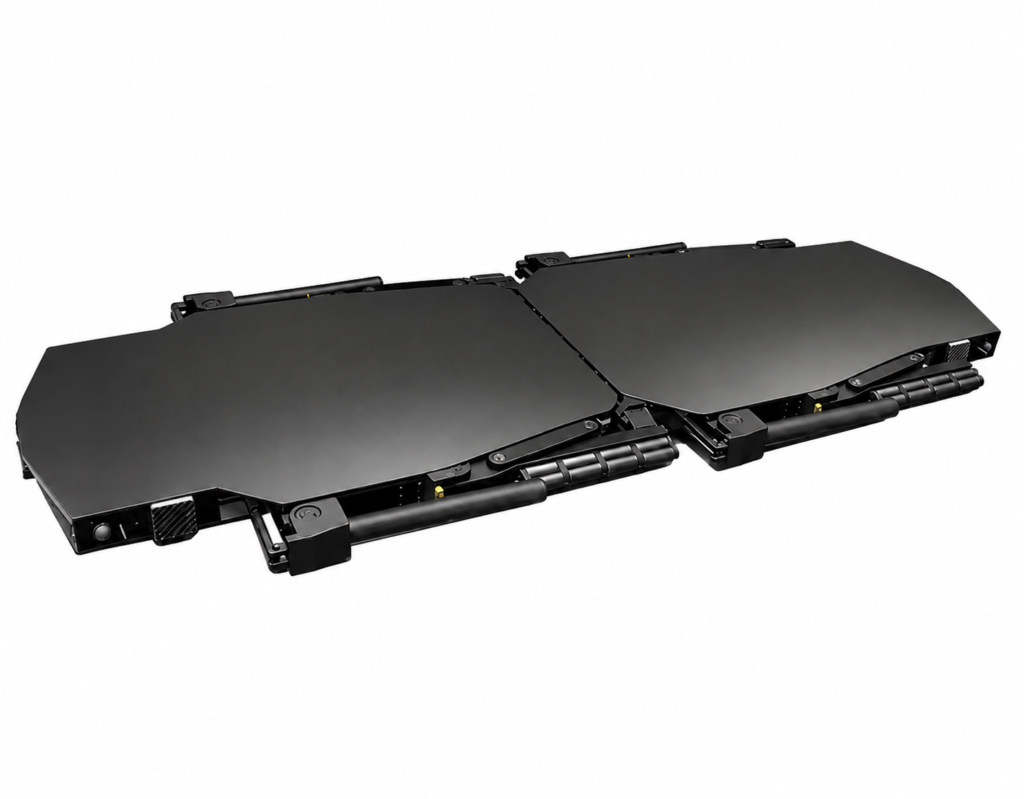
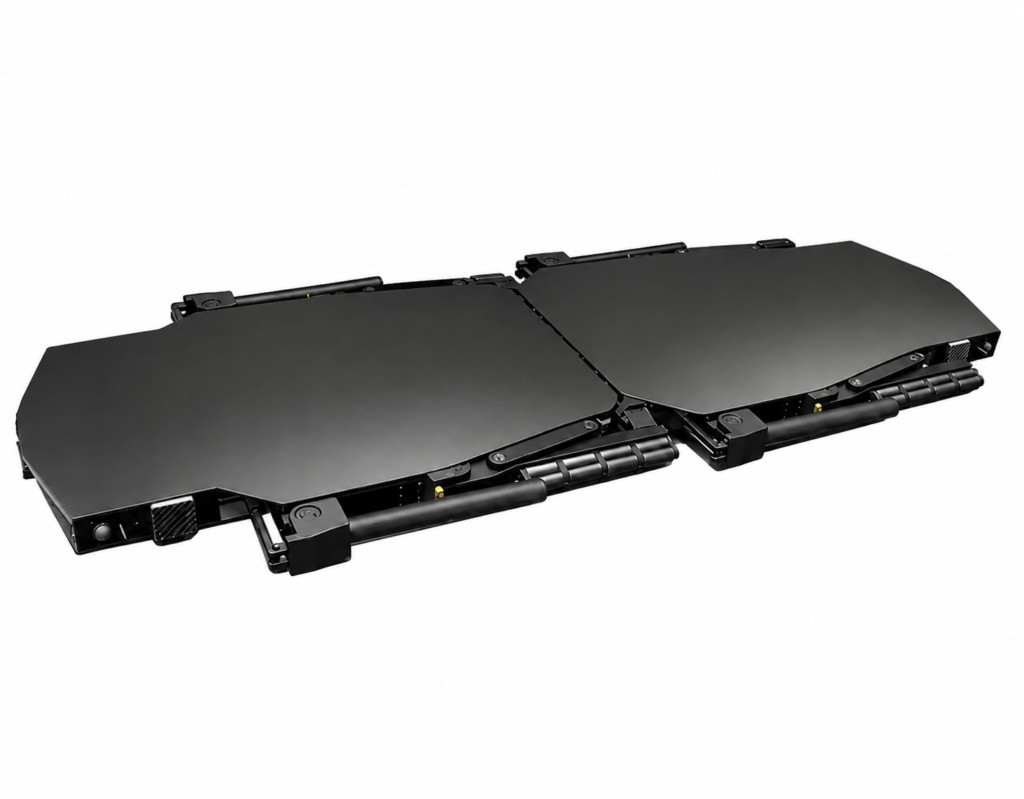
Robotic parking is a broad description for systems that automate all or part of placing, storing and retrieving vehicles. It can mean fixed lifts and pallets in an automated garage, a mobile robot that physically supports a conventional car, or an automated valet parking system in which the vehicle itself drives through a defined facility. Those are related but not interchangeable architectures. The distinction matters because it changes almost every buying question. A mechanical system is primarily a building-and-machinery project. A vehicle-moving AMR is a mechanical-handling and controlled-operating-zone project. AVP is a vehicle-plus-infrastructure automated-driving project. A conventional human valet service is principally a people, keys, route and customer-service operation. Each has a different vehicle interface, safety case, staffing model, cost base and failure mode.AutoMoverBot’s official website principally positions its product as a semi-automatic vehicle-moving AMR. The described robot is positioned beneath a compatible conventional vehicle, engages or lifts at the wheel area, and moves the vehicle without a person sitting inside it. The published material supports robot-side, human-supervised movement; it does not establish that the vehicle drives itself or that an AutoMoverBot installation is a fully autonomous AVP system. Vehicle-moving AMRs can be relevant where many compatible vehicles must be repositioned repeatedly inside a controlled area: for example, a dealership lot, vehicle auction, plant, storage compound, body shop, showroom or carefully designed valet operation. Their case should be tested against real vehicle mix, hard and level surface, drainage, people separation, charging, communications, recovery and peak retrieval demand—not judged from a demonstration alone.
At a glance- Automated Valet Parking and AutoMoverBot
| Question | Short answer |
| What is robotic parking? | An umbrella term for technology that automates vehicle placement, storage or retrieval. |
| Does a parking robot always mean a self-driving car? | No. A robot can carry a stationary conventional vehicle; AVP is the different case in which the vehicle drives itself. |
| Where does AutoMoverBot fit? | Its official pages primarily describe a semi-automatic, robot-side vehicle-moving AMR. |
| Can an AMR move every vehicle? | No universal claim is defensible. Weight, wheelbase, clearance, wheels, condition, surface and route must be verified. |
| Is keyless movement possible? | AutoMoverBot says its AMR can move a vehicle without the key; whole-valet key custody remains workflow-dependent. |
| What is the first feasibility check? | Identify the architecture, then measure real vehicles and survey the actual operating path. |
| What should a buyer not assume? | Published specifications, sensor references, marketing benefits and a label such as “AMR” do not prove site safety, certification, autonomy or ROI. |
The one-sentence test: if a machine goes underneath a conventional car and transports it, it is a vehicle-moving robot; if the car steers, accelerates and brakes itself in the facility, it is vehicle-side automated valet parking.
1. What Is Robotic Parking?
Robotic parking is the use of machinery, robotics and software to reduce or remove manual driving, vehicle handling or storage work in a parking process. It begins at a vehicle hand-over point and may end at retrieval. The term is useful for a reader, but it is not a technical specification. It does not say what physically moves the vehicle, how much human supervision is required, whether users can enter the storage area, or what happens when a system stops.A simple way to understand the category is to separate the parking service from the moving mechanism. The service comprises booking or access, arrival, check-in, identity, storage allocation, retrieval and collection. The mechanism may be a pallet and lift, an AMR, a shuttle, a driverless vehicle or a person. A customer can experience all of these as “robotic parking”, although the engineering behind them differs substantially.
| Architecture | What physically moves the vehicle? | Typical human interaction | Principal design boundary |
| Traditional valet | A human driver uses the vehicle. | Customer hands over vehicle; staff drive and retrieve it. | Staffing, keys, routes, insurance and service quality. |
| Mechanical automated parking system (APS) | Fixed lifts, pallets, shuttles, conveyors or rack machinery. | Customer leaves vehicle in a transfer cabin or pallet bay. | Building, machinery, access controls and recovery. |
| Vehicle-moving AMR | A mobile robot supports, clamps or carries the vehicle. | Staff or system positions, authorises and may supervise the move. | Vehicle interface, floor, operating zone, robot safety and recovery. |
| Automated valet parking (AVP) | The vehicle’s own steering, propulsion and braking. | Driver leaves a compatible vehicle in a defined hand-over area. | Vehicle automation, facility infrastructure, operational design domain and legal approval. |
| Hybrid system | More than one of the above. | Varies. | Interfaces between systems; failure responsibility. |
The main core components are usually: an arrival or hand-over zone; an identity and record process; allocation logic; the movement mechanism; a storage layout; a retrieval queue; safety and access controls; and a recovery process. In a mature facility, charging, CCTV, lighting, drainage, maintenance and customer communication are also integral components rather than afterthoughts.Automation exists on a spectrum. At one end, a porter uses a powered mover with local controls. In the middle, a semi-automatic AMR may navigate or complete a lift sequence while an authorised operator initiates and supervises the mission. At the other end, an AVP-capable vehicle may execute the parking drive in a prescribed domain after the customer activates it. The label “autonomous” can describe a navigation function but must not conceal a required operator action or a limited operating condition.Typical layouts include a transfer cabin connected to dense storage; a rear-of-house staging yard; rows of vehicles accessible only to a robot; vehicle preparation bays; a split public/controlled garage; or a purpose-built rack. A layout that achieves good storage density may be poor at peak retrieval if it has too few transfer points, recovery lanes or charged robots. Hence, capacity is not merely a count of spaces. It is also a time-dependent service question.
2. How Does Robotic Parking Work?
A robotic parking workflow normally has thirteen stages. The stages below describe a controlled vehicle-moving AMR workflow, because that is the relevant product architecture for the principal AutoMoverBot example. A mechanical APS or an AVP service may automate different stages, but should be documented to the same discipline.
| Step | Workflow stage | What should happen | Human versus automation boundary |
| 1 | Arrival | Vehicle reaches a marked hand-over or staging area. | Driver or attendant positions it. |
| 2 | Check-in | The service records the vehicle, customer/job and intended retrieval conditions. | May be manual, kiosk-led or integrated. |
| 3 | Drop-off | Occupants leave; vehicle condition and eligibility are checked. | Staff responsibility unless a validated automatic intake is present. |
| 4 | Identification | Registration, stock number, RFID, barcode or other approved identifier is tied to a record. | System can store; staff should resolve ambiguity. |
| 5 | Robot positioning | Robot approaches and aligns beneath the vehicle’s approved engagement zone. | Exact level of autonomy is model- and procedure-dependent. |
| 6 | Engagement/lift | Wheel-area clamps or lifting mechanism engage and support the vehicle. | Authorised confirmation and a load-state check are essential. |
| 7 | Movement | The robot takes the vehicle along a validated route. | The operating zone, speed, sensing and supervision must be defined. |
| 8 | Allocation | A compatible, available storage position is selected. | Software can assist; constraints must be current. |
| 9 | Storage | Vehicle is lowered/released and the robot clears the area. | Final safe position needs confirmation. |
| 10 | Retrieval request | Customer, dispatcher or technician asks for the vehicle. | Identity and release authority must be checked. |
| 11 | Dispatch | A robot travels to the stored vehicle and returns it to hand-over. | Mission priority and fault handling may be system-managed. |
| 12 | Delivery | Vehicle is placed at the collection bay. | Staff inspect and complete the release process. |
| 13 | Collection | The authorised person collects the vehicle. | Customer service and exception handling remain human responsibilities. |
The apparently simple middle section—approach, engage, lift, move and release—is only one part of the operation. The best question is not “Can the robot lift this car?” but “Can the facility process the right car, on the right surface, at peak demand, with safe people separation and a documented response to every credible interruption?”A well-designed hand-over area reduces ambiguity. It should prevent customers, waiting passengers and unrelated vehicles from entering the robot’s active zone. It should give an operator a safe viewing position. It should also allow the vehicle to be inspected before engagement and after retrieval. If vehicle identification, slot state and manual records disagree, the mission should be treated as an exception instead of relying on a guess.A storage allocation engine can be simple or complex. In a small supervised operation, a dispatcher may choose the bay. In a more integrated facility, software may consider vehicle dimensions, expected retrieval time, charge level, priority, blocked lanes and robot availability. This guide does not assume AutoMoverBot supplies a particular fleet-management or allocation platform; the official pages reviewed do not publish a complete software architecture or API specification.
3. What Is an Autonomous Mobile Robot (AMR)?
An autonomous mobile robot is a machine that moves through an environment using onboard sensing and software rather than being continuously driven by a person. In plain English, an AMR senses where it is, detects things around it and chooses or follows a route to do a task. Its degree of independence depends on its programming, environment and operating procedure.For a parking application, an AMR may receive a mission to collect a compatible vehicle at a hand-over location, position beneath it, support it, transport it to an approved bay and then return. It may use a map, route constraints, wheel encoders, inertial sensors, lasers, cameras, ultrasonic sensors or fixed references. However, none of those components should be assumed for an individual product without documentation.At a technical level, an AMR has four related functions. Localisation estimates its position. Perception detects vehicle geometry, people, walls and obstacles. Planning selects a lawful route and action. Control translates that plan into drive, steering, lifting or braking commands. Fleet software, if provided, adds task assignment, traffic rules, charging and records. Sensor fusion can make positioning more robust, but it also introduces calibration, occlusion, time-synchronisation and software risks.
| AMR function | Plain-English purpose | Common technical approaches | Procurement evidence to request |
| Localisation | Know where the robot is. | Encoders, IMU, visual odometry, LiDAR matching, markers. | Accuracy, map maintenance, degraded mode and error detection. |
| Perception | Notice people, vehicles and obstacles. | LiDAR, cameras, ultrasonic, radar, proximity switches. | Detection envelope, blind zones, lighting/weather limits and test results. |
| Planning | Choose a safe route and task order. | Route graph, occupancy map, mission rules, traffic manager. | Rules for blockage, conflict, stale map and priority changes. |
| Motion control | Start, stop, turn and regulate speed. | Drive motors, steering, brakes, feedback control. | Loaded stopping data by speed, slope and surface. |
| Load handling | Engage and retain the vehicle. | Clamps, forks, lift, wheel cradles or support pads. | Contact geometry, confirmation logic, stability and release failure plan. |
| Human interface | Allow authorised people to command and recover the robot. | Pendant, app, remote control, local panel. | Roles, authentication, range, logs and emergency override. |
| Communications | Exchange commands and status. | Wi-Fi, industrial WLAN, local controller or other link. | Coverage, security, latency tolerance and loss-of-link response. |
AMR and AGV labels overlap in industrial practice. An automated guided vehicle (AGV) traditionally follows a prescribed guide route, such as tape, wire, rail, markers or a fixed logical path. An AMR is commonly marketed as more able to localise and re-route from sensor data. ISO 3691-4 includes both AGVs and AMRs among examples of driverless industrial trucks, so a procurement specification should state actual navigation and safety behaviour rather than depend on the acronym alone.
| Question | Traditional AGV interpretation | AMR interpretation | Why the distinction is not absolute |
| How is it guided? | Prescribed route or guide infrastructure. | Map and onboard perception. | Modern systems can combine both. |
| How does a route change? | Often requires physical or fixed-system alteration. | May be changed in software within a validated zone. | Both require controlled change management. |
| What happens at an obstacle? | Often stops or follows defined logic. | May stop, classify, avoid or re-plan. | Protective safety response must be proven separately. |
| Is it autonomous? | Can run automatically on a route. | Can navigate with more environmental adaptation. | Neither label proves unsupervised operation. |
AutoMoverBot’s AMR explainer uses sensors, software, obstacle avoidance and route language, but it also distinguishes semi-automatic machines that require human control. Its “How the Automoverbot Works” page describes software and remote-control capability. Accordingly, a cautious description is a semi-automatic, human-supervised vehicle-moving AMR, unless a buyer obtains configuration-specific evidence to the contrary.
4. AutoMoverBot Explained
AutoMoverBot is presented by its official website as a supplier of vehicle-moving machinery and semi-automatic vehicle-moving AMRs. The central product idea is an external device that moves a compatible conventional vehicle without putting a driver in the vehicle. Official descriptions say the robot can be aligned beneath the vehicle, clamp or lift at the wheel area and transport it; the vehicle’s own engine, steering and autonomous-driving stack are not the published basis for that movement.
What problem it addresses
The relevant problem is repeated short-distance vehicle repositioning: moving cars between storage rows, staging zones, service areas, showrooms, auction lanes, production areas or hand-over positions. In an appropriate controlled environment, a vehicle-moving robot may reduce the need for a person to sit in and drive each vehicle for that specific internal task. It does not remove the need to assess vehicles, control pedestrians, deal with customers, verify safe engagement, maintain equipment or recover from a fault.AutoMoverBot’s home and application materials name parking, valet, airports, dealerships, auctions, logistics, manufacturing, museums, body shops, showrooms, police/forensic facilities, hospitals, offices, colleges and rail among intended fields. These are supplier-named applications. The reviewed official material does not identify a named customer, site, installed fleet, start date or independently auditable performance result for any one of them. The right editorial conclusion is that these are potential or claimed application sectors, not named verified AutoMoverBot deployments.
How the published mechanism differs from valet and AVP
A conventional valet driver has physical access to a vehicle and typically needs an agreed key custody process. An AutoMoverBot vehicle-moving process, according to its official material, can move a vehicle without the key and without entering it. The same official valet article describes key tagging and custody in some workflows, while noting advanced setups may not need keys. Therefore, it is accurate to say the robot movement may be keyless, but inaccurate to say every end-to-end valet operation using AutoMoverBot is always keyless. A vehicle-mounted AVP system is different again. In AVP, the vehicle’s own automated-driving capability controls steering, propulsion and braking inside a prescribed parking environment; the facility can supply maps or infrastructure sensing. ISO 23374-1 describes AVPS as Level 4 automated driving of unoccupied vehicles within a prescribed facility. AutoMoverBot’s published semi-automatic material does not establish that type of vehicle-side driving system.
| Feature | AutoMoverBot as officially described | Traditional valet | Vehicle-side AVP |
| Human driver required to move every car | No person is seated in the vehicle for the described robot move; human control/supervision may remain. | Usually yes. | No during the automated parking drive within its defined domain. |
| Vehicle keys required | Official pages support no key required for robot movement; whole-workflow key handling varies. | Normally part of the operating process. | Depends on vehicle/app/access design. |
| Vehicle movement mechanism | External robot engages/lifts at wheel area and transports vehicle. | Vehicle’s own controls operated by driver. | Vehicle’s own steering, propulsion and braking. |
| Vehicle movement automation | Published as semi-automatic; exact role allocation is configuration-dependent. | Manual driving. | Automated driving within specified vehicle/facility conditions. |
| Parking density potential | May improve storage layout where driver access is not needed; no universal percentage is published here. | Constrained by routes, door access and human driving. | Can change layout only if access, code, retrieval and vehicle conditions allow. |
| Physical infrastructure | Requires an appropriate floor, lanes, charging, control and safety zones. | Requires conventional routes, keys and staffing. | Requires compatible vehicles and validated infrastructure/operational domain. |
| Scalability | Fleet, operator and software limits are not publicly documented in detail. | Adds staff and capacity within route constraints. | Depends on compatible vehicles, infrastructure and approvals. |
| Operating constraints | Official pages publish vehicle, surface, water, dust, remote-control and charging restrictions for particular models. | Driver skill, route, keys and vehicle state. | Vehicle compatibility, map/infrastructure, operating domain and fallback conditions. |
What AutoMoverBot officially publishes—and what it does not establish
The most detailed official specification set belongs to the product page headed SEMI AUTOMATIC VEHICLE MOVING (AMR). Separately, the site lists AMB 2.5-ton/3.5-ton machinery and a different SEMI AUTOMATIC VEHICLE LIFTING MOVING (AMR) product. Their values differ materially. A buyer must first identify the precise model and revision rather than assemble a favourable composite from several pages. The official material also refers to Wi-Fi, remote control, sensors, LiDAR, cameras, ultrasonic sensing, obstacle avoidance and electromagnetic braking in various contexts. It does not publish a complete sensor bill of materials, safety-rated control architecture, stopping distances, cybersecurity design, conformity certificate, power-loss recovery, vehicle compatibility matrix, warranty duration, service-level agreement, API documentation or named customer references. These are not minor gaps; they are essential due-diligence items.
Published commercial positioning
The official site advertises purchase, short-term hire, monthly rental, long-term lease discussions and business-financing options. One buy-versus-rent page gives an approximate US$45,000 indication, but it does not provide a model-specific, current, inclusive quotation and contains hypothetical commercial examples. This guide therefore does not use it as an AutoMoverBot price. The financing page describes a three-payment arrangement subject to terms. Buyers should request a dated written proposal specifying the model, scope, shipping, taxes, commissioning, training, warranty, service, battery, spares, insurance and acceptance criteria.
5. AutoMoverBot Technical Specifications
The table below reports the exact published values for the specific SEMI AUTOMATIC VEHICLE MOVING (AMR) product page. It is not a generic specification for every AutoMoverBot product. Values for the AMB machinery and lifting-moving AMR are reported separately, because combining them would be misleading.
| Specification | AutoMoverBot specification | Why it matters for parking |
| Product identity | SEMI AUTOMATIC VEHICLE MOVING (AMR) | Links the figures to one published product page rather than the whole brand. |
| Robot dimensions | 2.1 m × 1.1 m × 0.115 m | Affects under-vehicle approach, robot storage, turning and staging clearance. |
| Robot weight | 500 kg | Must be included in floor, transport and dynamic-load assessment. |
| Maximum vehicle load | 3.0 t | A vehicle above the published maximum is not confirmed compatible. |
| Maximum vehicle width | 2.05 m, excluding mirrors | Body, mirrors, accessories and route clearance require separate checking. |
| Maximum vehicle length | 5.5 m | The page includes a stated overhang condition; obtain written interpretation. |
| Minimum wheelbase | 1.3 m | Short-wheelbase vehicles may not align with the engagement geometry. |
| Minimum ground clearance | 11.5 cm | Low front spoilers, skirts or modified suspension can prevent entry. |
| Clear width | 120 cm | Relevant to route and physical passage, but should be defined on a drawing. |
| Climbing capacity | 4.18% | A published model limit, not automatic approval of any ramp or stopping condition. |
| Maximum speed | 1 m/s | About 3.6 km/h; actual cycle time also includes loading, routing and release. |
| Telecommunications | Wi-Fi | Requires a coverage and resilience design; security details are not published. |
| Road planeness | ±20 mm/m² as published | A site-survey requirement; the notation should be clarified with the supplier. |
| Working time | 4 hours | Duty cycle, payload, recharge time and battery health are not defined on the page. |
How designers should read this table. A limit is an input to validation, not a guarantee. For example, maximum width is not the same as safe clearance through every gate and around every column. A maximum vehicle mass is not a substitute for axle-load, centre-of-gravity and tyre-contact evidence. A published gradient is not a stopping-distance test on a wet or dusty incline. A Wi-Fi field does not define authentication, roaming or how the machine behaves when the network fails.
Separate product data that must not be merged
| Separate official product family | Selected published values | Editorial caution |
| AMB 2.5-ton / 3.5-ton machinery | 2 × 12 V/210 Ah batteries; 24 V/30 A charger; 1,500 W drive motor; 2,000 W lift motor; 115 mm lift; 0–6.5 km/h E-CVT; electromagnetic braking; 800/900 kg listed weight. | The page gives shared data and does not clearly allocate every value between 2.5-ton and 3.5-ton models. Do not borrow Model A limits. |
| SEMI AUTOMATIC VEHICLE LIFTING MOVING (AMR) | 150 kg robot; 3.0 t load; 0.09/0.22/0.62 m/s speeds; ≥8 h continuous operation; IP65; ≥10 m remote/video distance; ≤430 mm lift height. | This is a different product with a different form factor. Its values cannot be presented as the 500 kg product’s values. |
Buyer’s compatibility checklist
Before a pilot, measure a representative vehicle set, including the heaviest, longest, widest, lowest, shortest-wheelbase, highest-value, EV and damaged/non-running classes actually expected. The published Model A limits offer a first screen, but a pass against headline dimensions alone is not approval.
| Check | Pass / conditional / stop logic |
| Actual vehicle mass | Pass only within the supplier’s published/confirmed load limit and required margin. Stop if above the approved limit. |
| Width and length | Conditional until body, mirrors, accessories, overhangs, aisles, gates and turning envelope are measured. |
| Wheelbase and wheel position | Conditional until engagement geometry is confirmed in writing and tested. |
| Ground clearance | Pass only when clearance at the entire approach path exceeds the applicable model limit. Stop for contact risk. |
| Tyres, wheels and condition | Conditional for unusual tyres, low pressure, flat tyres, damage or modified wheels. |
| EV and hybrid vehicles | Conditional until mass, underbody, towing/lifting guidance and charging state are reviewed. |
| Vehicle state | Stop or quarantine occupied, leaking, unsafe, evidence-sensitive or mechanically compromised vehicles until an approved procedure exists. |
| Surface and route | Pass only after a survey confirms surface, slope, joints, water, dust, clearance and people separation. |
| System evidence | Conditional until the exact model’s manual, risk data, support and recovery instructions are supplied. |
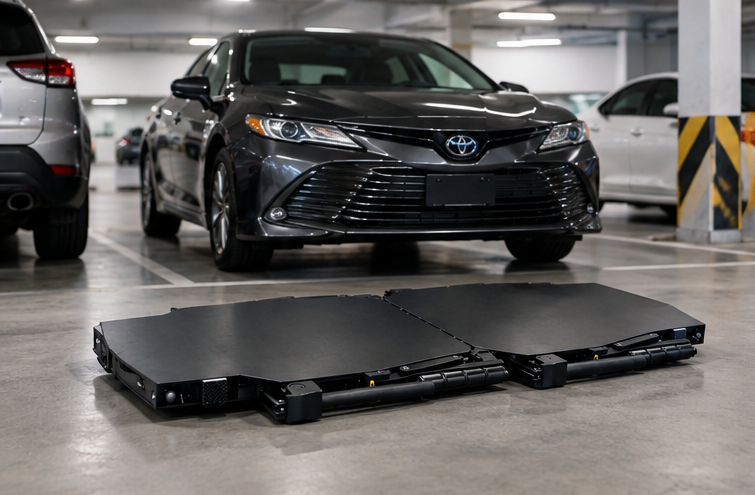
6. Robotic Parking vs Traditional Valet Parking
Robotic parking does not simply replace a person with a machine. It reallocates tasks. Traditional valet service places a human driver at the centre of vehicle movement; a semi-automatic vehicle-moving AMR may remove the need for that person to sit in the car for a compatible transfer, while increasing the importance of intake, supervision, safety management, charging, maintenance and customer communication.
| Operating dimension | Traditional valet | Vehicle-moving AMR model | Decision implication |
| Labour | Drivers perform vehicle movement. | Roles shift to preparation, authorisation, supervision and recovery. | Measure productive and exception time, not only driving minutes. |
| Keys | Key handover and custody are typically central. | Robot movement may be keyless; overall key policy still needs definition. | Map the full release and emergency process. |
| Vehicle access | Staff enter and operate the car. | Robot carries/supports car externally. | Compatibility and engagement take priority. |
| Throughput | Depends on drivers, walking distances and lane flow. | Depends on cycle time, robot availability, charging, route conflict and human steps. | Test peaks, not average moves. |
| Customer experience | Familiar, personalised, variable. | Can be predictable but needs clear hand-over and delay messaging. | Design for a human fallback. |
| Parking density | Driver access, doors and lanes shape layout. | Potentially different storage geometry where driver access is not required. | Never assume a universal gain. |
| Security | Depends on personnel, key controls, CCTV and process. | Can reduce unauthorised driving exposure, but becomes cyber-physical. | Combine physical, digital and procedural controls. |
| Liability | Driving, key custody, parking and damage policies. | Adds mechanical handling, system operation and recovery responsibilities. | Agree contracts, evidence and incident procedures before launch. |
| Training | Customer service, driving and local procedures. | Adds machine operation, exclusion zones, inspection and emergency response. | Competence must be documented and renewed. |
| Maintenance | Vehicle-lot infrastructure and staff equipment. | Robot, lift/clamp, sensors, batteries, chargers, network and safety controls. | Include preventative maintenance and spares in TCO. |
A robot can be valuable if manual travel between vehicles is repetitive, physically undesirable or hard to staff, and the environment is bounded enough to manage safely. It may be a poor fit if the facility accepts a constantly changing vehicle population, has uncontrolled pedestrians, poor surfaces, standing water, impossible retrieval peaks or no credible recovery provision. The comparison must remain local: a small indoor showroom, a public airport forecourt and a flood-prone external yard are not equivalent.
7. Robotic Parking vs Automated Valet Parking
Vehicle-moving robot approach: a robot physically moves a stationary conventional vehicle. The robot is the mobile system that senses, plans and moves. The vehicle need not contain a driver or an automated-driving function for the robot to transport it, provided it is mechanically compatible.
Automated valet parking approach: a compatible vehicle drives itself, unoccupied, through a defined parking facility. The vehicle’s own systems control the driving task. The facility may contribute maps, cameras, LiDAR, communications, access control and traffic logic. ISO 23374-1 frames AVPS as Level 4 automated driving in a prescribed facility, involving vehicle, facility and user subsystems. That standard definition should not be applied to a robot that carries a car externally.
| Criterion | Vehicle-moving AMR | AVP / vehicle-side automation | Consequence for buyers |
| Moving agent | External robot. | Vehicle itself. | Do not substitute one architecture’s evidence for the other’s. |
| Vehicle controls used | Not necessarily; robot carries or supports vehicle. | Steering, propulsion and braking are automated. | AVP needs compatible vehicle systems. |
| Main compatibility question | Wheel/tyre/vehicle geometry, mass, clearance and robot interface. | Vehicle model/software plus facility operational design domain. | A conventional car may suit an AMR but not AVP. |
| Main safety question | Load engagement, stability, pedestrian interaction, floor and recovery. | Automated driving perception, path planning, fallback and vehicle/infrastructure integration. | Hazard analyses differ. |
| Regulatory language | Machinery, workplace, building, electrical and local rules may apply. | Vehicle automation, facility, software and jurisdictional approvals may apply. | Seek specialist legal/compliance advice. |
| SAE level relevance | No SAE driving-automation level follows from the robot’s autonomy. | SAE terminology may be relevant to the vehicle driving task. | Never call an AMR “SAE Level 4” merely because it navigates. |
The Bosch/Mercedes-Benz/APCOA case at Stuttgart Airport is an instructive AVP example. APCOA reported commercial approval for selected Mercedes vehicle variants at the P6 garage in 2022. The vehicle is parked by its own systems using intelligent garage infrastructure; no robot lifts the vehicle. This must not be cited as evidence of a vehicle-moving AMR’s capability.
By contrast, Lyon-Saint Exupéry Airport’s dated description of Stanley Robotics’ Stan describes a robot that accepts a conventional vehicle in a cabin, engages at the wheels and stores it in an outdoor lot. In that design, the car does not drive itself through the lot. Both may be labelled robotic or automated parking by a casual observer. The responsibility boundary is entirely different.
8. How Does a Robot Move a Car Without the Driver?
A vehicle-moving robot works more like a purpose-designed, low-profile transport platform than like an invisible chauffeur. The vehicle remains stationary while the robot approaches. The robot aligns with the wheel area or another approved support interface, then performs a controlled engagement or lifting operation. Once the vehicle is supported, the robot’s own drive system transports the load through the designated area. At the destination, it positions and lowers/releases the vehicle before continuing to its next task.
A useful analogy, with limits: imagine a specialised wheeled handling device that can approach beneath a car, support its wheel area and carry it to a nearby location. Unlike an ordinary trolley, a parking AMR can have sensing, navigation and control functions. The analogy does not prove the design, safety integrity or compatibility of any particular robot.
AutoMoverBot’s official AMR explanation describes moving below the car, clamping and lifting at the wheels. Its AMB machinery page describes positioning against tyres and selecting load/unload actions. The published material supports the general wheel-area handling mechanism, but does not publish a complete engineering drawing of contact points, axle-load distribution, wheel-size matrix or recovery procedure. These must be validated for each selected model and vehicle class.
| Physical stage | What must be true before proceeding | Key risk if not controlled |
| Approach | Correct vehicle identity; clear route; vehicle is within approved condition. | Robot approaches wrong vehicle or blocked zone. |
| Alignment | Wheel position and robot orientation match approved geometry. | Off-centre engagement or underbody contact. |
| Engagement | Clamp/lift reaches its specified state and load is supported. | Partial support, tyre damage or unexpected release. |
| Verification | System/operator confirms load, clearance and no person in the danger area. | Movement starts with unstable load or nearby person. |
| Transport | Floor, slope, speed, route and communications are within validated limits. | Loss of traction, collision, obstacle or route conflict. |
| Placement | Destination is free, stable and does not obstruct safety access. | Misplaced vehicle, inaccessible retrieval or blocked egress. |
| Release | Vehicle is safely supported by the floor and robot is clear. | Roll, unsupported vehicle or collision on departure. |
A professional acceptance plan should test the largest and lowest permitted vehicles, representative tyre conditions, real slopes, surface transitions, emergency stops, obstacles and a complete release/retrieval cycle. Visual success with one saloon car proves very little about a heterogeneous fleet.
9. Do Robotic Parking Systems Need Car Keys?
Not always. A vehicle-moving robot may move a compatible conventional vehicle without entering the cabin or using its ignition key. AutoMoverBot’s official AMR explanation makes that claim for the described physical movement. Its valet material also describes a key-tagging and secure-custody process in some operating workflows. The accurate conclusion is that keyless robot movement is supported, while a universally keyless end-to-end service is not established.
Keylessness can reduce the number of occasions on which a valet driver needs to enter or drive a vehicle. It does not by itself prove security, authorisation or correct release. A robust process still needs to identify the vehicle, authenticate the person requesting it, record the mission, supervise exceptions and control physical access to storage.
| Security control | Why it matters in robotic parking | What must be confirmed |
| Vehicle identification | Stops a move or retrieval being assigned to the wrong vehicle. | Identifier source, error handling and reconciliation process. |
| Customer/employee authorisation | Controls who can request collection or movement. | Identity checks, delegation and cancellation rights. |
| Key custody | Covers cases where keys are required for handover, maintenance or emergency. | Storage, access log, reconciliation and exceptions. |
| CCTV | Provides oversight at hand-over, active movement, charging and retrieval. | Coverage, retention, access and privacy rules. |
| ANPR or digital records | May link vehicle identity to mission and timestamp. | Whether the system exists, accuracy and data-protection basis. |
| Controlled zones | Keeps unauthorised people out of movement and storage areas. | Barriers, doors, alarms and visitor procedures. |
| Audit trails | Supports investigation of requests, approvals, faults and release. | Fields recorded, immutability, time synchronisation and retention. |
| Cybersecurity | Protects movement commands and records. | Authentication, network segmentation, updates and incident plan. |
A buyer should treat “no key required” as a narrow operational capability to verify in a vehicle-specific trial. It does not tell them whether the vehicle should remain locked, how alarms behave, who can move it after hours, or what a technician does if a partially handled vehicle needs manual release.
10. How Much Space Can Robotic Parking Save?
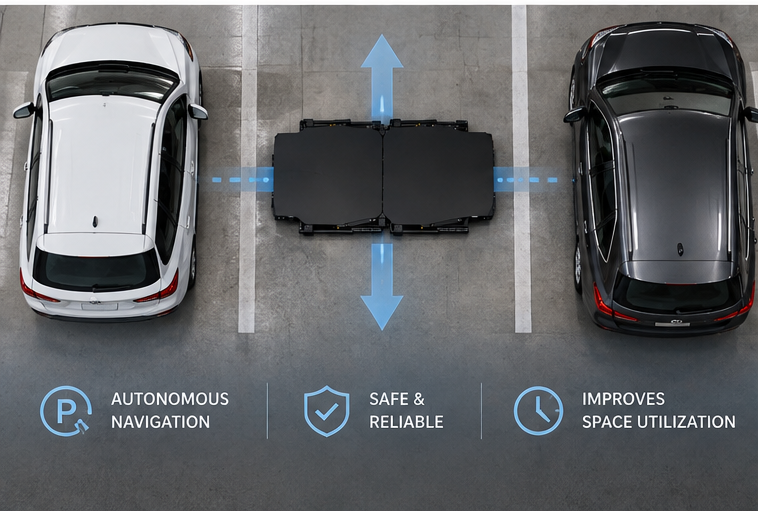
Robotic parking can change the space required for circulation and vehicle access, but it does not have a universal percentage saving. Conventional self-parking needs driving lanes, door-opening space and pedestrian routes. A robot-only storage zone can reduce the need for a person to sit in every stored vehicle, while a mechanical system can stack or shuttle vehicles within a controlled structure. Every architecture still needs a safe hand-over area, retrieval capacity, accessible spaces, fire routes, inspection access and a recovery route.
The mechanism behind a claimed density improvement must be stated. A vehicle-moving AMR may permit different storage-row spacing if the robot can enter, engage, travel and retrieve without a person accessing the car. A mechanical automated parking system may obtain density through lifts, pallets and racks, but requires dedicated structures, shafts and machinery zones. AVP can change how a compatible vehicle uses a garage but retains a driving envelope and an operational design domain. It is misleading to copy a percentage from one category to another.
| Space factor | Conventional self-parking | Vehicle-moving AMR | Mechanical APS | Buyer’s verification question |
| Driving lanes | Sized for drivers and manoeuvres. | Can become controlled robot routes after hand-over. | May be replaced by transfer machinery. | What does the actual travel and retrieval plan show? |
| Door-opening clearance | Required at user-accessible cars. | May be reduced in no-access storage only where permitted. | Usually absent in inaccessible rack storage. | Where are inspection, emergency and accessible functions performed? |
| Vertical storage | Constrained by building geometry. | Not inherent; needs additional equipment if required. | Common in purpose-built systems. | Is structural and fire design complete? |
| Arrival/retrieval | Bays and conventional lanes. | Defined staging/loading and collection space still needed. | Cabin or transfer-bay capacity needed. | Can peaks queue without blocking public areas? |
| Emergency access | Must remain clear. | Must remain separated from robot routes. | Must be designed into the machinery layout. | Has the authority having jurisdiction reviewed it? |
| Net storage capacity | Baseline comparison. | Depends on vehicle mix and robot envelope. | Depends on project geometry and transfer cycle. | Has a scale drawing been independently checked? |
The Whole Building Design Guide observes that aisles, ramps and circulation make the gross area of conventional parking far larger than the cars’ footprints, and identifies automated parking as a possible response where land is scarce. This is planning context, not an AutoMoverBot saving claim. Accessibility is not spare capacity: for example, US Access Board guidance requires accessible parking access aisles to connect to accessible routes and not overlap vehicular ways. Comparable local regulations must be applied in the project jurisdiction.
Practical rule: approve no density claim until the scaled design identifies each vehicle path, robot path, hand-over point, queue, storage position, emergency route, accessible route, charger, maintenance space and failed-vehicle recovery location.
11. Robotic Parking for Airports
Airports have high land values, long dwell periods and flight-driven retrieval peaks. Long-stay parking, premium valet, employee parking, rental-car staging and landside vehicle logistics all involve repeated vehicle movements. The operating challenge is that a service may need to retrieve many cars at once after disrupted flights, while maintaining security, passenger wayfinding, weather controls and 24-hour recovery capability.
Lyon-Saint Exupéry Airport illustrates a vehicle-moving-robot architecture. The airport’s 14 March 2023 announcement describes the P5+ service with four Stanley Robotics Stan robots, 12 hand-over cabins and up to 500 spaces. The passenger books, leaves a conventional vehicle at a cabin and takes a shuttle; the robot moves the car into storage and returns it later. The car is not driving itself. This is strong, dated evidence of a named airport service, but it does not demonstrate that another robot, layout or airport will achieve the same result.
Stuttgart Airport P6 demonstrates the contrasting AVP model. APCOA reported approval in 2022 for infrastructure-assisted parking of selected Mercedes-Benz variants. In that instance a compatible vehicle drives itself under the defined system conditions; a floor robot does not carry it.
| Airport use case | Potential use of robotic parking | Key operating constraint | Evidence needed |
| Long-stay car park | Controlled dense storage and scheduled retrieval. | Return peaks and weather. | Peak-day queue model and recovery plan. |
| Premium valet | Cabin or kerbside hand-over plus back-of-house movement. | Service expectations and key/custody process. | Customer journey, fallback and liability policy. |
| Employee parking | Repeatable staff access and limited vehicle population. | Shift-change surge. | Vehicle sample and staff coverage plan. |
| Rental-car operations | Moves between preparation, storage and collection. | Interfaces with washing, charging and inspection. | Interface responsibility and quarantine workflow. |
| Restricted landside fleet | Controlled logistics within an authorised zone. | Security and emergency access. | Access-control and incident plan. |
AutoMoverBot names airports and high-speed railway stations among application fields on its contact page. The reviewed material does not identify a named airport installation, airport throughput evidence or independently auditable airport case study. That is a supplier indication of potential applicability, not proof of deployment.
12. Robotic Parking for Car Dealerships
Dealerships are often a credible screening environment for vehicle-moving robots because vehicle movements can be repetitive and bounded: transporter drop-off to preparation, preparation to display, display to hand-over, service to storage and demonstrator retrieval. A controlled back-of-house compound may allow a clearer separation of pedestrians, vehicle classes and routes than a public garage.
The operational case still turns on real variation. A dealership can hold tall SUVs, low-clearance sports cars, EVs, customer vehicles, display vehicles, cars with damaged tyres and cars fitted with accessories. A headline weight/length check is inadequate. The pilot needs a formal vehicle register, exception categories and measured retrieval performance.
| Dealership activity | Value hypothesis | Critical test | Human work that remains |
| Delivery intake | Reduce repetitive positioning moves. | Surface, slope and transporter-area congestion. | Inspection and eligibility decision. |
| PDI/preparation | Repeatable transfer between work zones. | Water, cables, doors and people controls. | Work release and condition recording. |
| Showroom placement | Move eligible vehicles without driving inside. | Floor finish, clearance and public separation. | Customer-area protection. |
| Demonstrator retrieval | Find and present a requested car. | Peak demand and correct-vehicle identity. | Key/condition and customer hand-over. |
| Stock storage | Different storage geometry for compatible stock. | Guaranteed retrieval path for each vehicle. | Priority and exception management. |
AutoMoverBot names dealerships and showrooms as application sectors, but no named dealership deployment was identified in the reviewed first-party pages. A suitable pilot should measure end-to-end request-to-handover time, intervention rate, energy use, vehicle-condition observations and recovery time; it should not measure only maximum drive speed.
13. Robotic Parking for Vehicle Auctions
Auctions combine high vehicle volume with intense, timed movements among intake, inspection, imaging, sale lanes, storage and dispatch. These conditions can make a vehicle-moving AMR attractive where routes are controlled, but they also make exceptions common. Auction fleets include non-running, damaged, low-tyre-pressure, modified and unusual vehicles. The project must separate normal automated flows from a safe manual or quarantine process.
| Auction stage | Potential automation task | Exception requiring controlled treatment |
| Intake | Register and stage compatible vehicles. | Uncertain identity, fluid leak, tyre issue or damage. |
| Inspection/imaging | Move to defined presentation position. | Photographer/pedestrian intrusion or wet route. |
| Sale-lane staging | Sequence vehicles to time and lane. | Late withdrawal, blockage or priority change. |
| Post-sale storage | Separate sold from unsold vehicles. | Ownership hold or incorrect record. |
| Dispatch | Retrieve to authorised carrier collection. | Carrier surge, low battery or unavailable robot. |
The best auction KPI may be reliable on-time staging rather than theoretical storage density. Simulate a sale-day surge in the pilot, including worst-case vehicle mix and a full recovery drill.
14. Robotic Parking for Hotels and Resorts
Hotels and resorts may consider robotic parking for controlled back-of-house valet staging. The case is not merely operational; it is reputational. Guests expect clear, rapid collection, careful handling and a human response when something unusual happens. Arrivals may include luggage, children, mobility aids and unfamiliar vehicle variants, so a public hand-over must be staffed, accessible and physically separated from active robot movement.
No reviewed AutoMoverBot page identifies a hotel or resort deployment. Consequently, this is a potential-use discussion rather than a claimed case study. Any hotel evaluation should involve guest terms, insurer review, CCTV, secure key policy, high-value vehicle protocols, wet-weather restrictions and a manual alternative for incompatible or delayed vehicles.
15. Robotic Parking for Residential Buildings
Residential and mixed-use developments may seek parking automation because ramps and circulation consume expensive floor area. Fixed mechanical systems are commonly designed into towers. Vehicle-moving AMRs can instead be evaluated for a controlled level or back-of-house operational area, but residents create a high availability expectation: a vehicle may be requested at any hour.
Lödige Industries reported in February 2025 that a pallet-and-conveyor system was operating at the 210 South 12th residential tower in Philadelphia. Cars enter a cabin, and a hoist and conveyors store them across three levels. This is mechanical automated parking, not a free-moving vehicle AMR; it highlights the building-integration work behind a real residential system.
| Residential concern | Why it matters | Requirement |
| 24-hour service | Residents need predictable retrieval. | Defined support and manual-fallback process. |
| Vehicle variation | Fleet changes throughout building life. | Living compatibility and exclusion register. |
| Accessibility | Parking cannot displace accessible routes. | Independent code and user review. |
| Fire/egress | Dense storage affects response and evacuation. | Fire-engineer and authority review. |
| Noise/vibration | Equipment works close to homes. | Measured evidence and operational limits. |
| Maintenance | Breakdowns directly affect residents. | Spares, escalation and communication process. |
16. Robotic Parking for Hospitals
Hospitals may have acute parking pressure, but they also impose unusually high accessibility, emergency-access and resilience requirements. A robot service must never impede ambulance routes, emergency vehicle access, patient drop-off, fire egress or accessible circulation. A segregated staff/service area may be more feasible than an open public car park, but that remains a site-specific decision.
| Hospital question | Required answer before a pilot |
| Emergency routes | Do all routes remain clear in normal operation, fault and recovery? |
| Accessibility | Are bays, aisles and routes retained and independently checked? |
| Peak pressure | Can arrivals/departures be handled without public queues? |
| Hygiene | Can the robot, floor and hand-over processes be kept clean? |
| Resilience | Is there a safe manual process when equipment or network fails? |
| Governance | Who has authority to stop operations during an incident? |
AutoMoverBot lists hospitals among fields of application but the reviewed materials do not name a hospital project. Any suitability statement should retain this distinction.